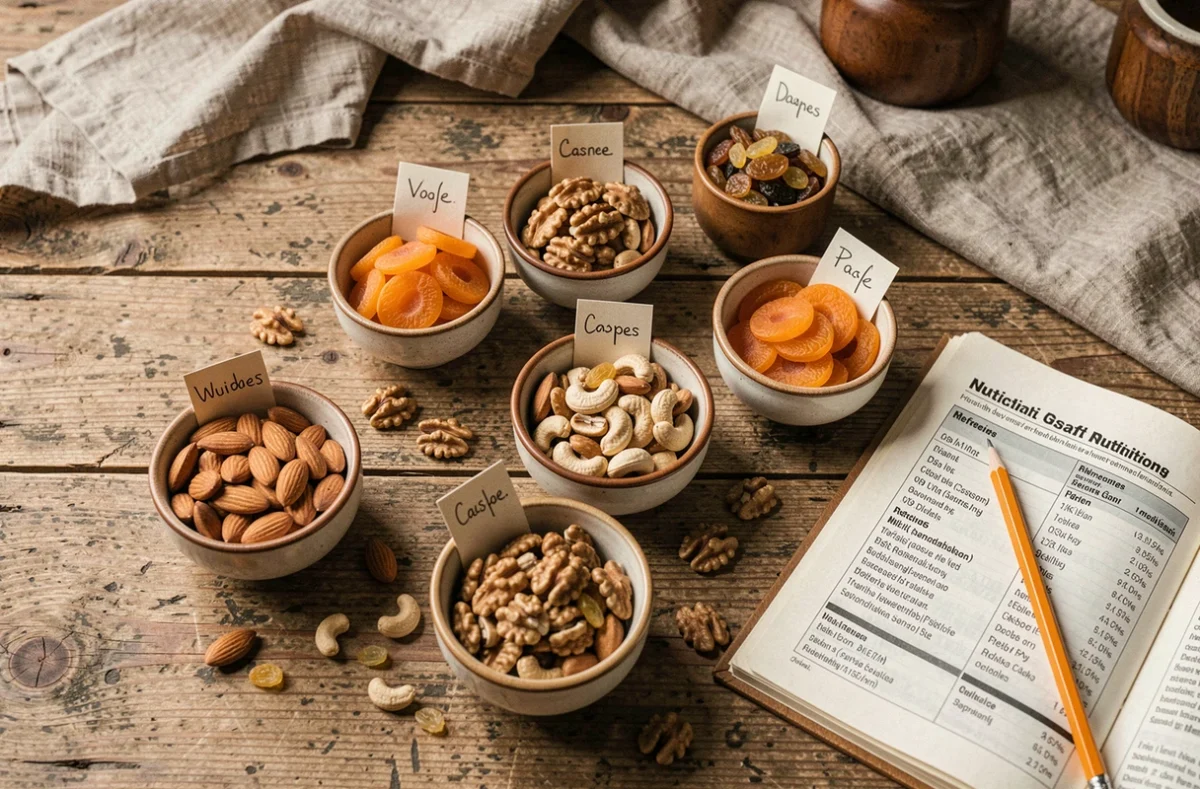
A handful of almonds and a handful of cashews have almost the same calorie count on the label. Yet their actual effects on appetite and calorie intake can vary depending on how you eat them. Comparing nuts and dried fruit solely by calories per 100 g overlooks what happens after chewing: the food’s structure, processing and serving size all make a difference.
Whole, ground or chopped almonds: form affects calorie absorption
Have you ever noticed that a spoonful of almond butter takes just seconds to eat, while a handful of whole almonds takes several minutes to chew? That’s no coincidence.
Experimental studies have compared whole almonds, chopped almonds and almond butter. The finding: the degree of processing affects how much energy is actually available. Whole almonds retain some of their fat within their plant cells. This fat is not fully released during digestion.
In other words, your body extracts fewer calories from a whole almond than from the same amount in butter form. Controlled nutrition studies have also measured lower metabolizable energy in whole almonds than estimates based on standard factors, with the difference linked to their intact cellular structure.
In practice, this means that comparing the calories in almonds versus other nuts and dried fruit based solely on the nutrition label gives you an incomplete picture. Form matters just as much as the number.

Dried fruit versus nuts: calories, portions and satiety
Dried fruit (dried apricots, raisins, dates) and nuts (almonds, walnuts, hazelnuts) belong to different nutritional categories, even though they’re often grouped together under the label “dried fruit and nuts.”
How they differ in serving size
Dried fruit is mostly concentrated sugar. Its sweet taste and soft texture make it easy to reach for more. Nuts, which are higher in fat and protein, require more chewing.
- A handful of whole almonds (about 23 almonds) takes time to eat, giving satiety signals time to reach the brain.
- An equivalent-calorie serving of raisins can be eaten in just a few bites, without the same physical barrier.
- Spread on bread, almond butter encourages eating in much the same way as dried fruit: it’s easy to use more than you intended.
Chewing whole nuts helps you stick to a serving size, whereas dried fruit and nut butter go down easily.
Adding nuts does not cause weight gain in trials
One point that’s often misunderstood: a review of randomized trials found that, on average, adding nuts did not lead to significant changes in weight, BMI or waist circumference. This average result is no guarantee for any individual, especially if nuts are added to meals rather than replacing another source of calories. But it challenges the common belief that their high calorie density inevitably leads to excess weight gain.
How filling are nuts and dried fruit? What the science says
It’s often said that almonds or walnuts “curb hunger” and that a handful is all you need to last until your next meal. That claim deserves a closer look.
Reviews of the scientific literature suggest that the satiating effect of nuts does not always make up for their calories. In some settings, participants ate less at their next meal. In others, they only partially compensated.
Why the variation? Several factors come into play:
- When you eat them: as a standalone snack, whole almonds can help you manage your intake better than when you mindlessly snack on them in front of a screen.
- What you eat them with: a few almonds with fresh fruit slow digestion more than almonds on their own.
- Individual differences: some people naturally compensate at their next meal, while others do not.
Relying on satiety as your only criterion for choosing what to eat would be a mistake. The context in which you eat matters just as much as the food itself.
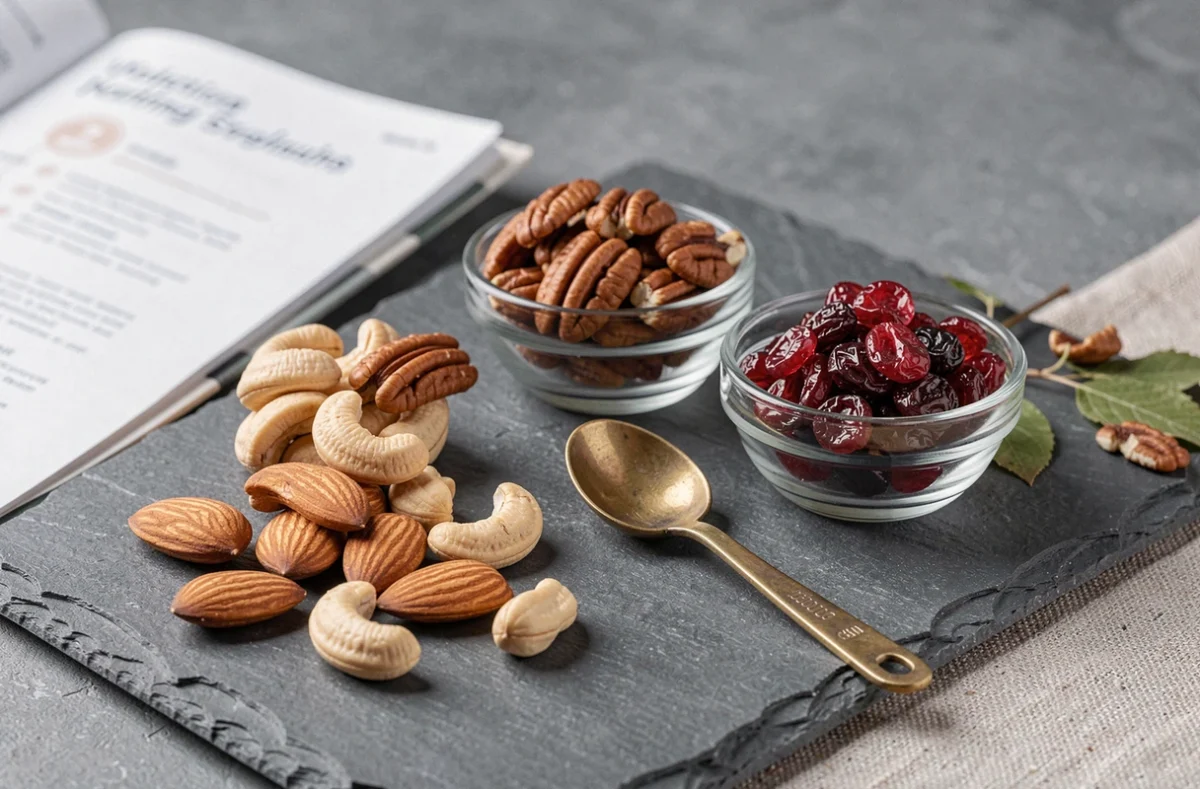
Which nuts and dried fruit should you choose to manage your daily calorie intake?
Rather than looking for the lowest-calorie option per gram, think about how you plan to eat it. Here are three everyday situations that call for different choices.
As a mid-afternoon snack
Whole, unroasted and unsalted almonds are a solid choice. Their intact structure slows absorption, and chewing sets a natural pace. Aim for a small handful (around 20–25 almonds) and close the bag. Brazil nuts and hazelnuts serve a similar purpose.
As a topping for yogurt or porridge
Flaked almonds or chopped walnuts add crunch without turning your dish into a calorie bomb, as long as you measure them with a spoon rather than eyeballing the amount. Avoid pouring almond butter straight from the jar: without a measuring spoon, it’s easy to overdo the portion.
When you’re craving something sweet
Two or three dates paired with a few whole almonds offer a good compromise. The dates’ sugar satisfies an immediate craving, while the almonds provide fat and protein to help the feeling last. The mistake would be to swap the almonds for almond butter on the dates, which makes them much quicker to eat.
The best nuts or dried fruit for managing calories aren’t the ones with the lowest number on the label. They’re the ones whose form and eating context naturally help limit how much you consume. Choosing whole nuts, portioning them in advance and eating them mindfully remains the most reliable strategy, whatever you choose.