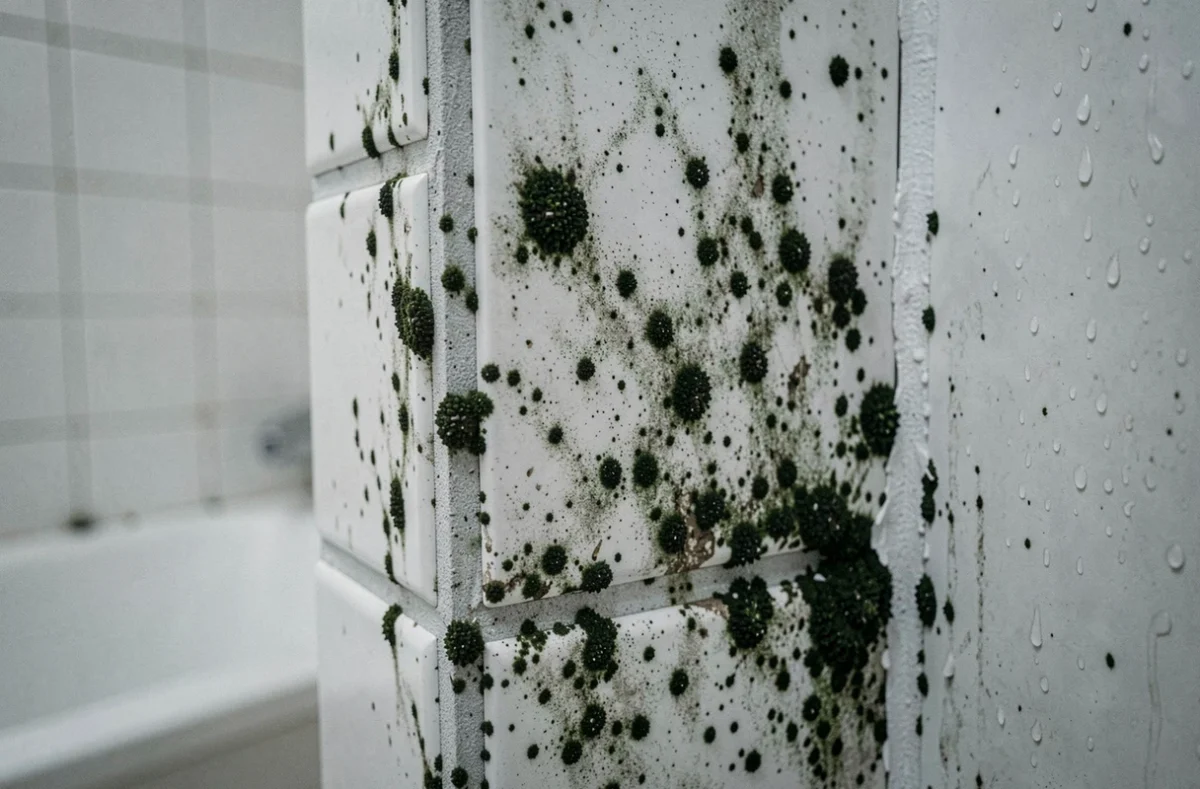
Mold on a bathroom wall is always a sign of an imbalance in temperature and humidity. Before spraying anything, you need to identify the exact type of fungal growth and the source of moisture feeding it; otherwise, cleaning will only buy you a few weeks.
Differential diagnosis: condensation, water ingress or a leak
Visible mold alone is not enough to determine its cause. Three mechanisms can produce very similar-looking marks on a bathroom wall, but each calls for a radically different solution.
Condensation is the most common cause. It forms when water-vapor-laden air comes into contact with a cold surface. Upper corners, wall returns and window lintels are affected first because air circulates less freely there.
Water ingress from outside (a crack, a failed seal on a flat roof, or a porous facade joint) causes localized stains that worsen in rainy weather. The damp area often feels cold to the touch, even with the heating on.
A leak from a concealed pipe can be identified by a damp patch that spreads regardless of the weather. If the stain keeps growing, turn off the water supply for a few hours to check: if a leak is the cause, the area will stop getting wetter.
If the mold returns after cleaning, documenting the affected areas (dated photos and moisture readings, if possible) can help guide further diagnosis. We recommend not applying additional surface treatments until the source has been identified.
Cleaning mold from a wall: methods and limitations of common products
Reaching for bleach is common, but it should be used with care. On non-porous surfaces (tiles, glazed ceramic, glass), diluted bleach effectively removes surface mold. On render, plaster or cement grout, it bleaches the stain without penetrating deep into the mycelium, and must never be mixed with another product (as this can release chlorine gas).
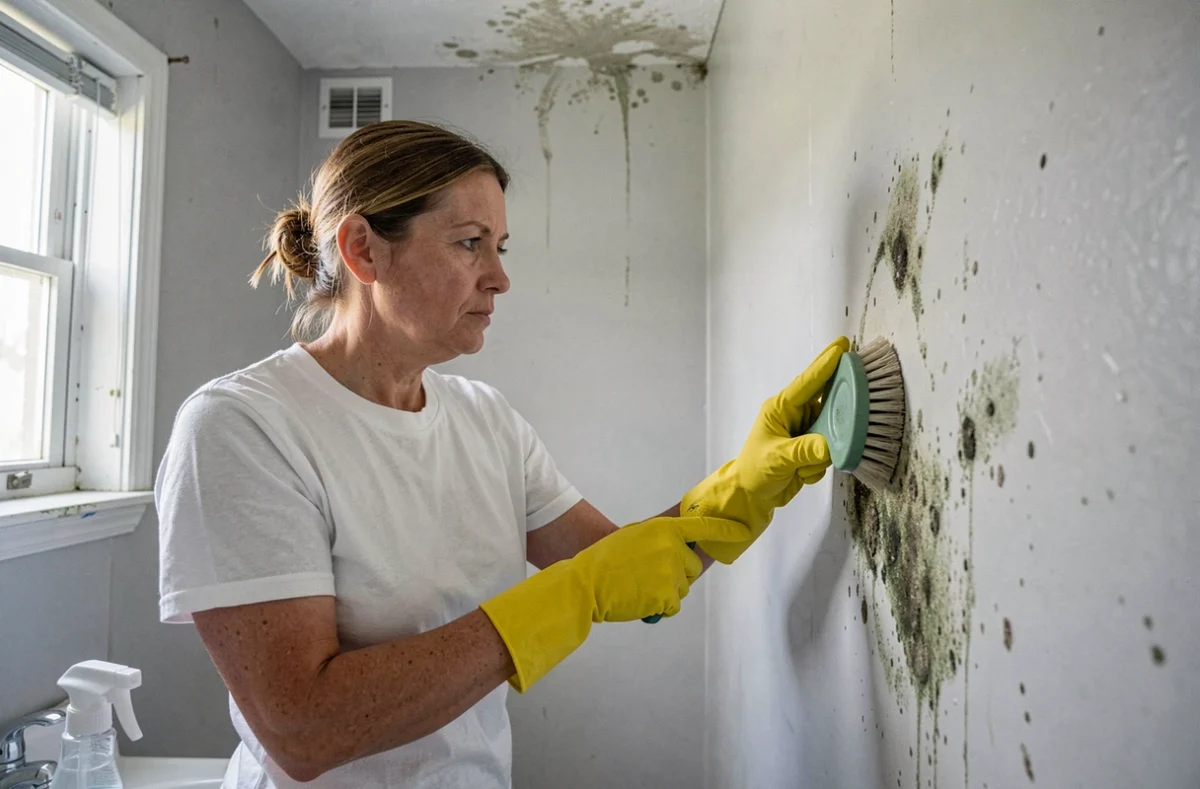
For small patches on grout or walls, health guidance favors physical removal: wipe with a damp cloth soaked in detergent, scrub, rinse with clean water, then dry thoroughly. Disinfection is not always necessary.
Before treating mold on a bathroom wall, protect your respiratory system (wear an FFP2 mask), put on gloves and open the window. Children should not be present during the process.
White vinegar and baking soda on tile grout
Undiluted white vinegar has a documented antifungal effect on surface mold. Spray it onto the grout, leave it for an hour, then scrub with a stiff brush. It works well on recent growth.
Baking soda mixed with a little water to form a paste is mainly used as a mild abrasive to brighten dull grout. Its own antifungal effect is limited, but the combination of mechanical action (scrubbing) and chemistry (alkaline pH) helps slow regrowth.
- White vinegar: effective on non-porous surfaces. Leave it to work before rinsing. A few drops of tea tree essential oil can enhance its effect.
- Baking soda paste: a mild abrasive suitable for tile grout. Apply with a stiff-bristled brush.
- Regular detergent and a damp cloth: enough for small marks on painted walls, provided you dry the surface afterward.
Bathroom ventilation: the key to preventing mold from returning
Without improving ventilation, any mold you clean will come back. This is the point most guides gloss over, even though it determines how long the treatment will last.
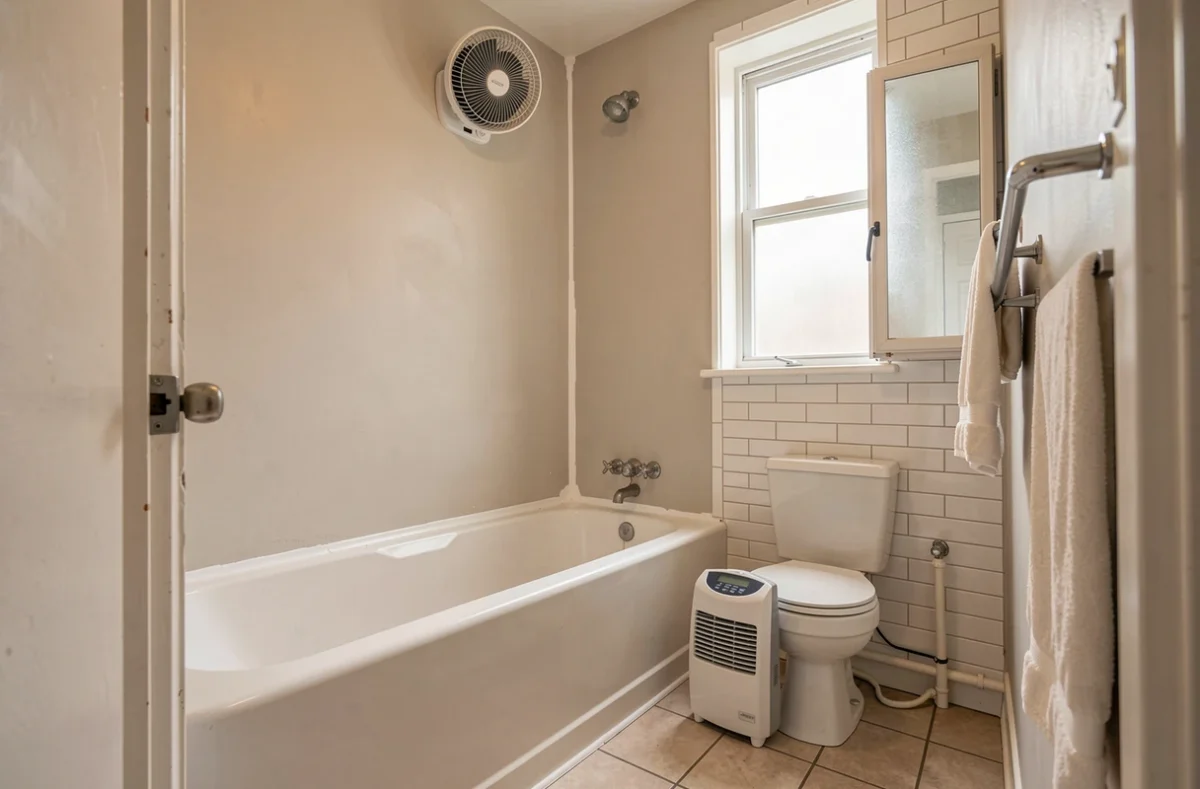
A properly functioning mechanical ventilation system (MVHR) continuously extracts humid air from the room. The extractor grille should be kept clear and cleaned regularly: a dirty grille can lose much of its rated airflow.
Check the airflow and extraction rate
A simple test is to hold a sheet of paper against the extractor grille while the ventilation system is running. If the paper does not stay in place, the airflow is insufficient. Possible causes include a crushed duct, a worn-out fan motor or a grille blocked with dust.
If there is no mechanical ventilation, airing the room manually after every shower (by opening a window or leaving the door open to a ventilated room) is the bare minimum. Leaving the door closed after use turns the bathroom into a mold incubator.
Heating and wall insulation
An uninsulated exterior wall stays cold even when the room is heated, causing condensation to collect on it. Internal insulation with a vapor barrier moves the dew point away from the wall surface and stops condensation at its source. It is an investment, but it is the only structural solution when ventilation alone is not enough.
Extensive or persistent mold: when to call a professional
Mold covering more than a few dozen square centimeters, affecting waterlogged materials (swollen plasterboard or peeling render), or returning despite thorough cleaning and improved ventilation is beyond the scope of household treatment.
A professional assessment can identify the source of moisture using measurements (a contact hygrometer or thermal imaging camera) and determine whether materials need to be removed or can be treated in place.
- Waterlogged plasterboard: replace it, as mycelium penetrates the material and cannot be cleaned off the surface.
- Deteriorated cement or lime render: remove the damaged material and reapply it once the substrate has dried completely.
- Anti-mold paint: useful as a finishing coat after the underlying cause has been addressed, but ineffective as a standalone solution on a damp wall.
In a rental property: who is responsible and who pays?
Tenants should air the property, maintain accessible extractor grilles and report any mold as soon as it appears. Landlords must ensure the property is protected from water ingress and has a functioning ventilation system. If the problem is caused by a structural defect (water ingress, no mechanical ventilation or inadequate insulation), the landlord is responsible for the repair costs.
Lasting mold removal from a bathroom wall always comes down to solving a two-part problem: remove the visible colony, then cut off the moisture supply that fed it. Cleaning without fixing the building only delays the next outbreak.