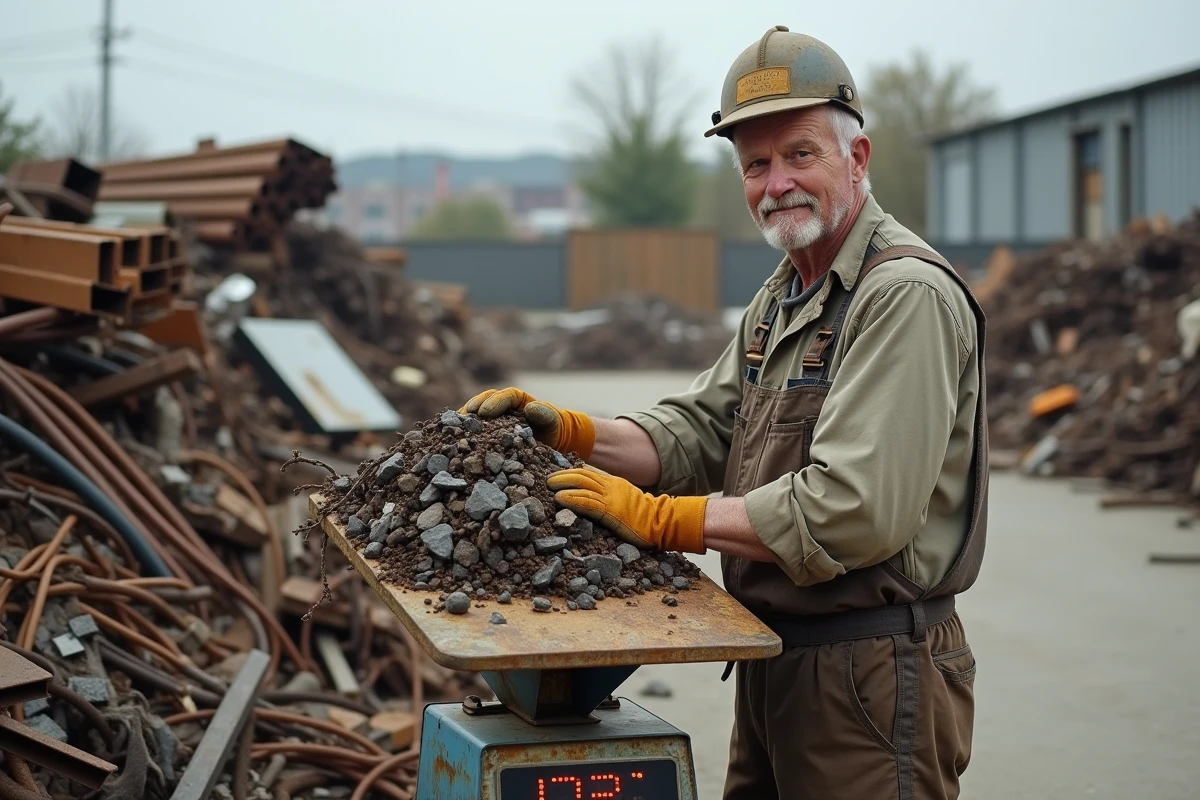
The price of scrap metal varies each week, influenced by fluctuations in global markets and changes in recycling costs. Some alloys, although less known, regularly exceed the value of traditional metals, thanks to unpredictable industrial demand.
Price discrepancies are observed depending on sorting, cleanliness, and the chosen drop-off point. Industry players apply different pricing structures, creating a market where knowledge of categories and accurate estimation become essential levers for optimizing resale.
Scrap prices today: overview of ferrous and non-ferrous metals
Day by day, the volatility of the markets reshapes the metal prices. The price of scrap today is determined under the influence of the London Metal Exchange, with immediate repercussions even in sorting centers in Marseille, Paris, or Île-de-France. Here, the value of a kilo primarily depends on the type of metal, but also on its purity and the movements of global demand.
Copper leads the way with values flirting with the peaks. Recently, the copper price has stabilized around 7 to 8 euros per kilo for impeccable bare copper. A step behind, brass and bronze play in the league of sought-after metals, between 3 and 5 euros per kilo. Aluminum trades more modestly, close to 1 euro per kilo. As for ferrous metals like steel or cast iron, they remain accessible, from 0.15 to 0.25 euro per kilo for lots from demolitions or machining.
In this landscape, the separation between ferrous and non-ferrous metals is no coincidence. Zinc, lead, or tin, less common, can reach 2 euros per kilo if purity is met. Industry professionals scrutinize the indexes every week to adjust their offers, always on the edge of volatility.
Staying updated on the price of scrap today requires consulting quotes, assessing the type of metal, its condition, and the quantity to be sold. Careful sorting, impeccable transparency on each transaction: this is what truly weighs in the balance during the final negotiation.
How to estimate the value of your scrap according to type and quality?
It’s impossible to set a single rule: scrap is never sold at the same rate depending on the lot. To establish the buyback price, everything starts with the precise identification of the metal and the examination of its condition. Differentiate between bare copper, whether it is the famous bright red or millberry bare wire, mixed copper, tinned copper, or armored copper. From one type to another, purity and presentation can raise or lower the quote, sometimes doubling the price.
Bright red bare copper (whether shiny, varnished, rigid, or flexible) outperforms the others: it fetches the best prices, far ahead of other variants. Conversely, non-bare copper or armored copper suffers a marked discount. The same reasoning applies to aluminum: pure and clean, it yields more than a mixed alloy. The same goes for stainless steel, brass, zinc, or bronze: each category has its pricing structure, but it all depends on the degree of sorting and cleanliness.
Here are the main benchmarks to help you navigate the prices:
- Rigid or millberry bare copper: at the top of the chart
- Brass, aluminum, stainless steel: intermediate values depending on the level of purity
- Steel, cast iron: moderate prices but welcome volumes
Precise sorting, the absence of unwanted materials (dirt, plastic, paint), and strict separation of categories: these details make all the difference in valuation. Once your lot is weighed, type and quality determined, consult updated scales on reference platforms to obtain a solid estimate before any recycling or sale operation.

Selling your scrap: practical tips to maximize your gain with confidence
Successfully selling scrap metal requires meticulous preparation. Start by sorting carefully: group aluminum, copper, brass, steel, zinc, and lead into homogeneous lots free of any non-metallic residue. This rigor catches the eye of metal buyback specialists and ensures you an optimized buyback price.
Choose a recognized collection site, where waste management and recycling go hand in hand with reliability. Serious professionals provide a detailed receipt after weighing, precisely listing the metals sold, a guarantee of transparency and regulatory compliance.
Prices evolve with the metal prices. Keep an eye on the copper price, aluminum price, or steel price through global marketplaces like the London Metal Exchange, to choose the right moment to sell. The real-time published scales are your best ally.
To optimize each transaction, keep these recommendations in mind:
- If you have significant volumes, negotiate the purchase price per kilo by highlighting the quality of your sorting.
- Request a certified scale and a clear receipt after weighing to avoid unpleasant surprises.
- Inquire about the services offered: on-site pickup, quick payment, administrative follow-up.
On the ground, industrial areas like Paris, Gennevilliers, or Épinay-sur-Seine see tons of metal waste passing through every day. Here, scrap buyback is negotiated by the kilo, depending on the nature of the metal residues, cables, aluminum, copper, steel, and each well-sorted lot takes on a whole new value. The market never sleeps: it awaits the next lot, and perhaps yours.