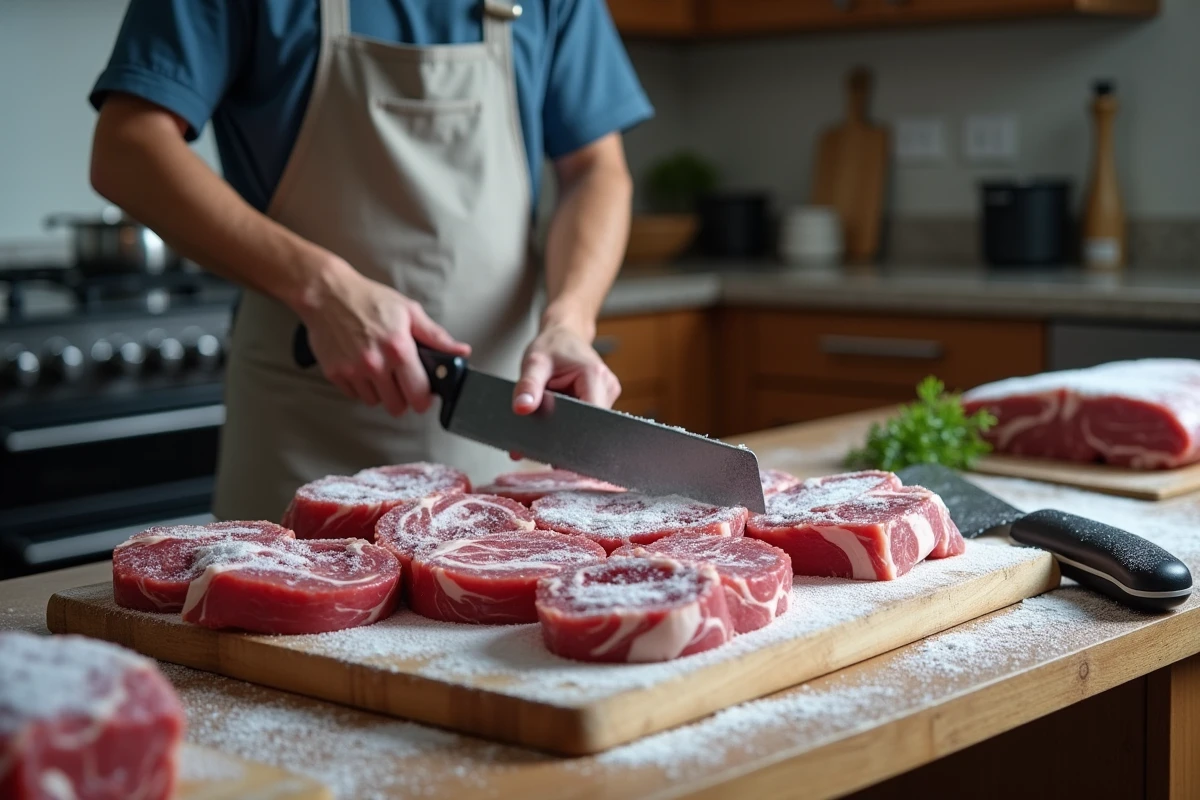
Cutting frozen meat without prior thawing requires suitable tools and precise techniques. The muscle fibers hardened by freezing resist traditional smooth blades, which leads many individuals to force unsuitable knives. The Consumer Safety Commission has noted a significant increase in injuries related to this practice. We review seven concrete techniques for working safely and obtaining clean portions.
1. Manual bone saw with a new blade
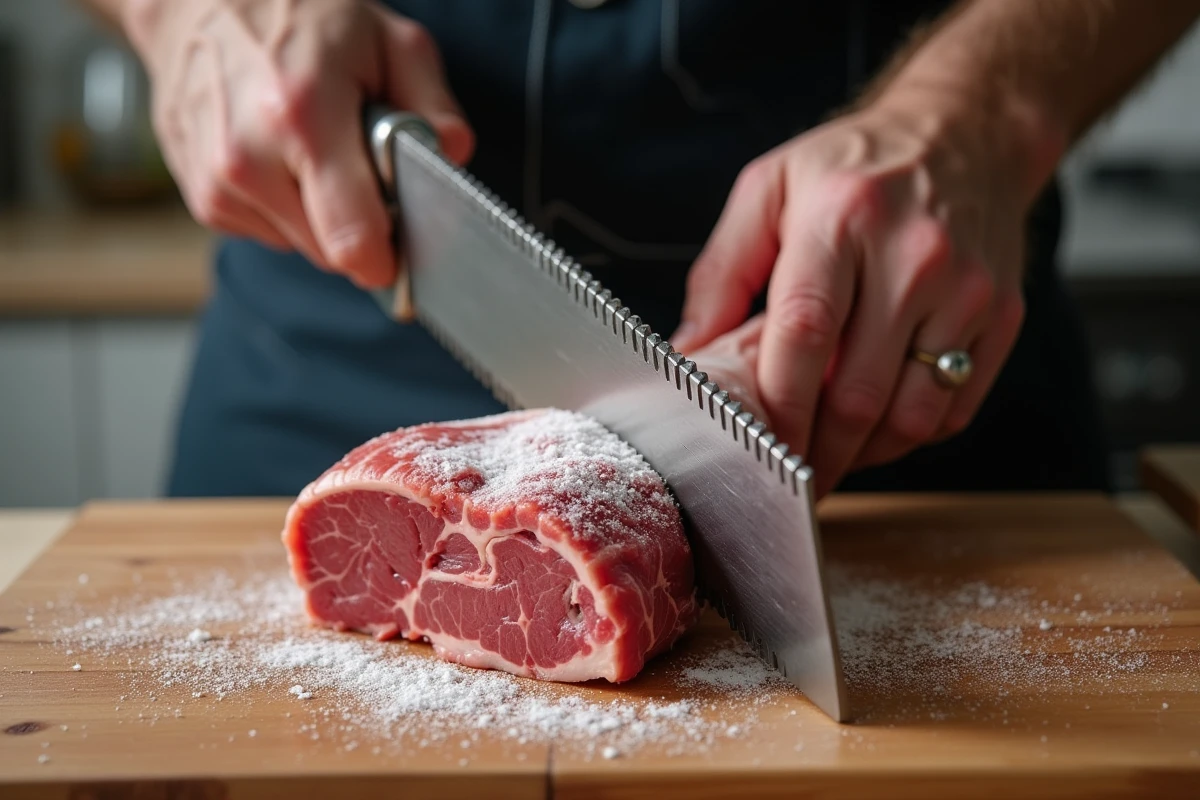
The manual bone saw remains the most reliable choice for thick blocks over five centimeters. Its aggressive serrated blade bites into the frozen material without slipping, where a chef’s knife would slide on the glazed surface. We recommend a new blade for each session: a dull blade requires more pressure and increases the risk of lateral slipping.
The correct motion mimics that of sawing wood, with long and steady movements. Secure the block against the edge of a board or in a kitchen vise. Comparative tests published by UFC-Que Choisir confirm that a saw dedicated to frozen foods provides cleaner and faster cuts than a traditional knife on large pieces.
To find more tips for cutting frozen meat, the key remains to adapt the tool to the size of the piece.
2. Electric knife with micro-serrated blades for frozen foods
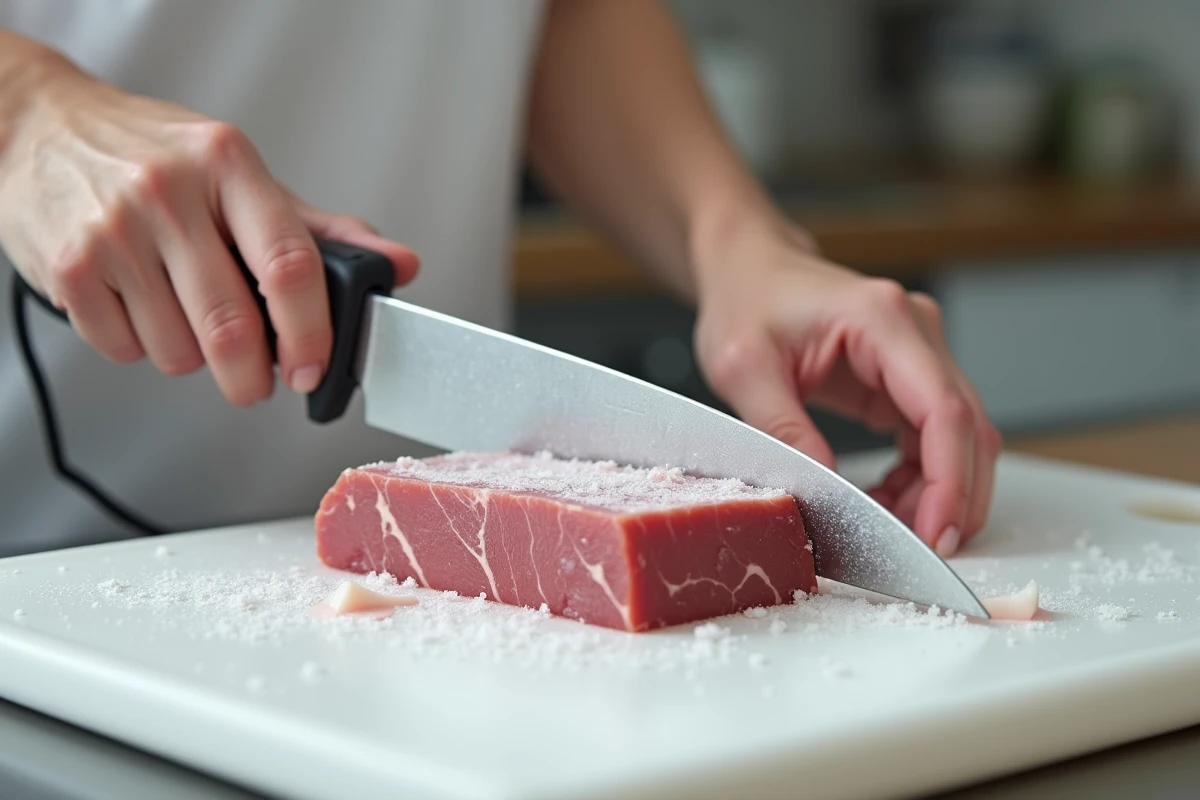
The electric knife equipped with specific micro-serrated blades for frozen foods is the most ergonomic option for repetitive cuts. The dual oscillating blade reduces physical effort to almost nothing, limiting wrist fatigue and the risk of uncontrolled jerky movements.
Not all models are created equal. Choose a device with a motor power exceeding the entry-level threshold and, above all, check that the blade set includes a frozen version (wider serration, thicker steel). A common model is priced between 30 and 40 euros at appliance retailers.
The limitation of the electric knife appears on very massive blocks: beyond a certain thickness, the short blade does not reach the center and forces the user to turn the piece. For standard portions (fillets, escalopes, ground beef patties), it remains very effective.
3. Controlled semi-thawing method in the refrigerator
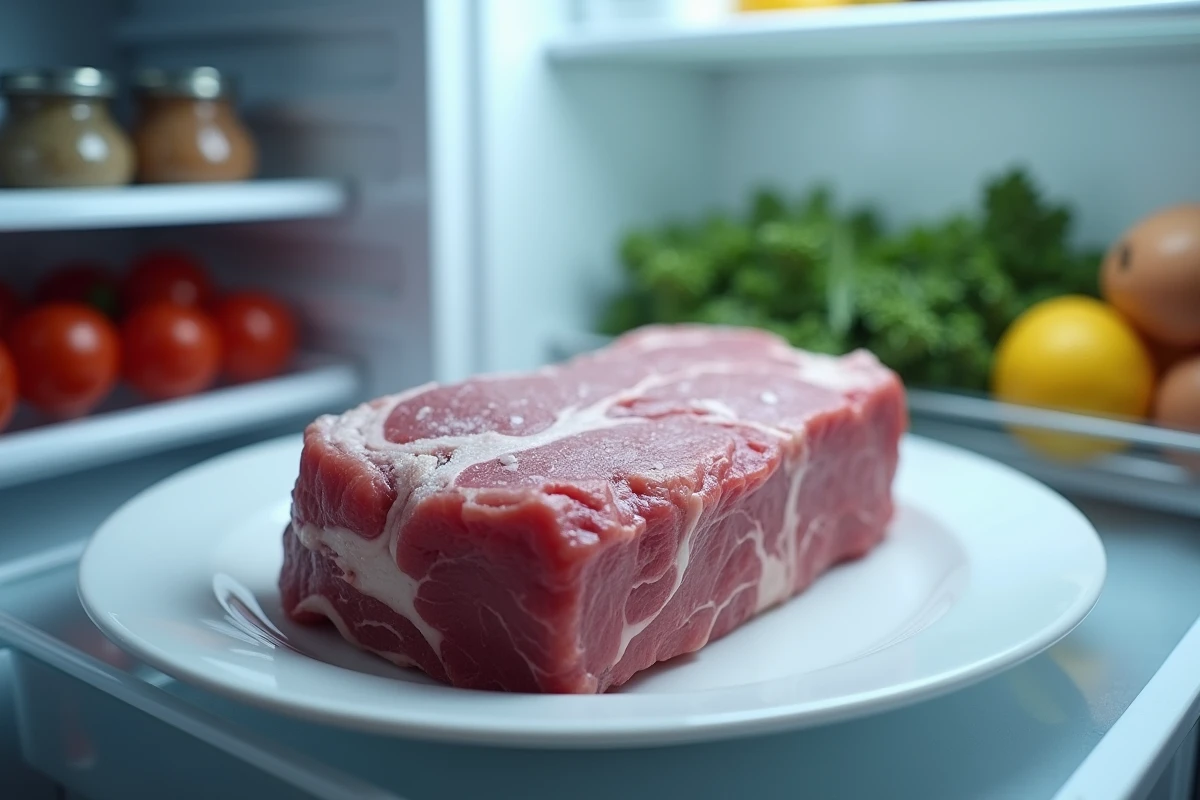
Leaving the meat in the refrigerator for 20 to 40 minutes before cutting radically transforms the resistance of the piece. The goal is to reach a semi-firm state, soft enough for a well-sharpened chef’s knife to penetrate, but still rigid enough to slice cleanly without crushing the fibers.
ANSES reminds us that the meat must remain below 4 °C during all handling to prevent bacterial proliferation on the surface. Taking a block to room temperature “just for a few minutes” quickly exceeds this threshold, especially in summer. The refrigerator is the only method considered safe by French health authorities.
This technique is particularly suitable for fine cuts (carpaccio, slices for Chinese fondue) where the residual rigidity from the cold helps maintain a consistent thickness.
4. Butcher’s cleaver (heavy cleaver) on a thick board
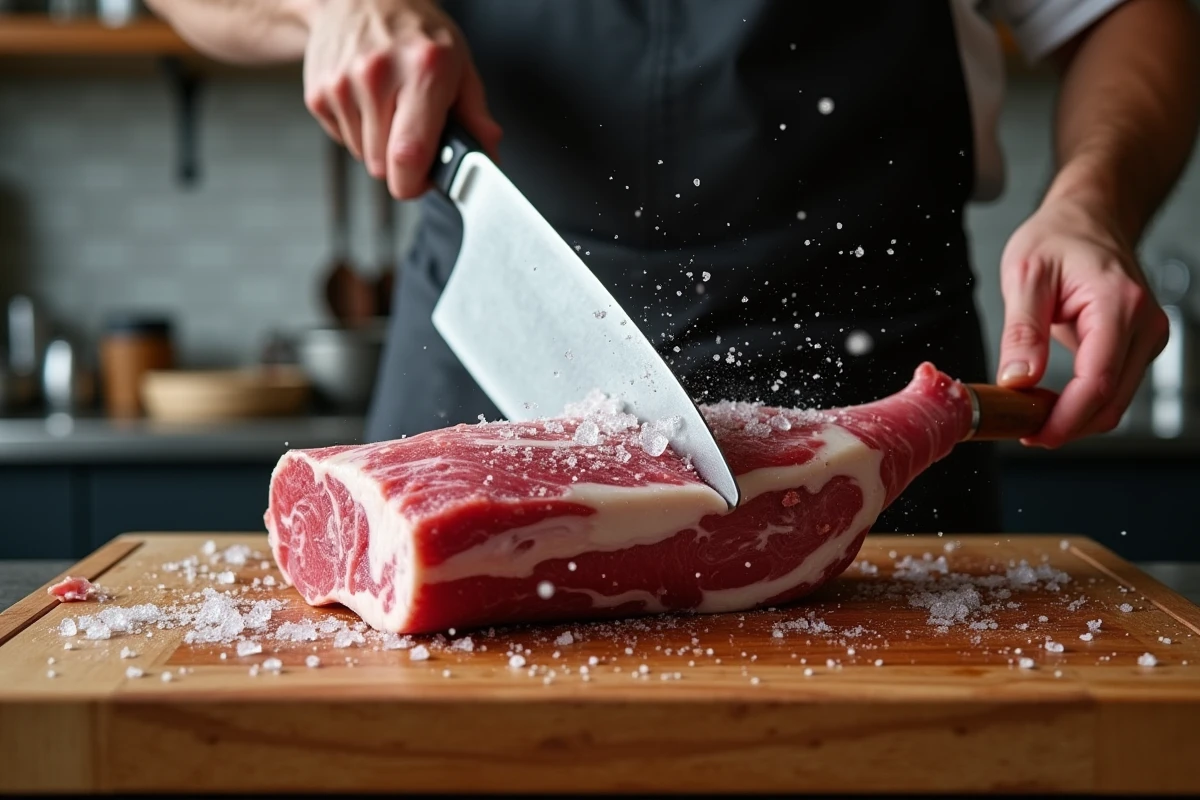
The heavy cleaver utilizes mass rather than sharpness. On a frozen block, a firm and vertical impact separates the piece in two without sawing. The motion requires less precision than a knife, but it necessitates a thick and stable cutting board capable of absorbing the shock without slipping on the work surface.
Place a damp cloth under the board to stabilize it. Aim for the cutting line by raising the cleaver to shoulder height, then let the weight do the work. Two or three strikes are usually sufficient to cut through a standard-sized block of chicken fillets.
The cleaver is not suitable for millimeter cuts. It serves to portion into large pieces that can then be refined with a knife after slight thawing.
5. New metal saw reserved for food use
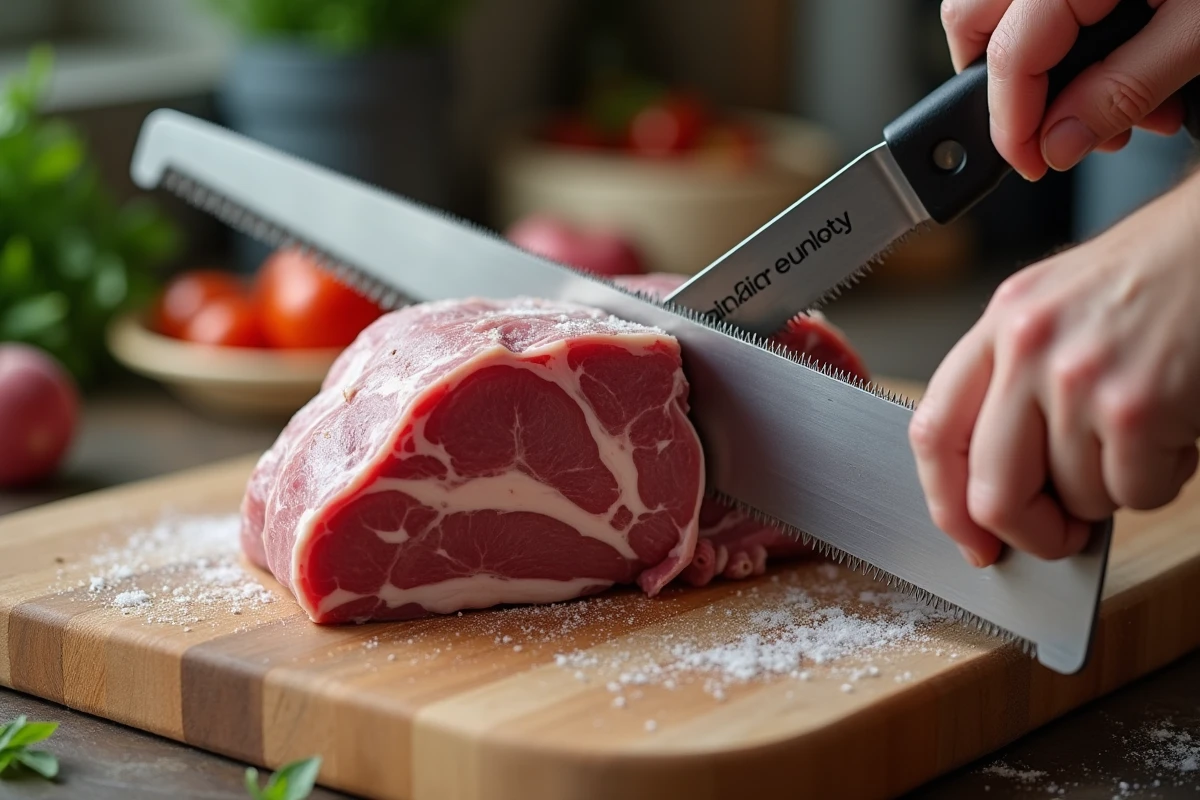
The standard metal saw, provided it is new and exclusively dedicated to food use, can cut through the most stubborn blocks. Its fine blade with tightly spaced teeth allows for a narrow cut that generates minimal material loss.
We emphasize a hygiene point: the blade must be new, free of industrial lubrication oil, and cleaned with hot soapy water before first use. After cutting, clean and dry immediately to prevent oxidation. Some users keep a dedicated metal saw frame stored with kitchen equipment.
6. Technique of running under cold running water
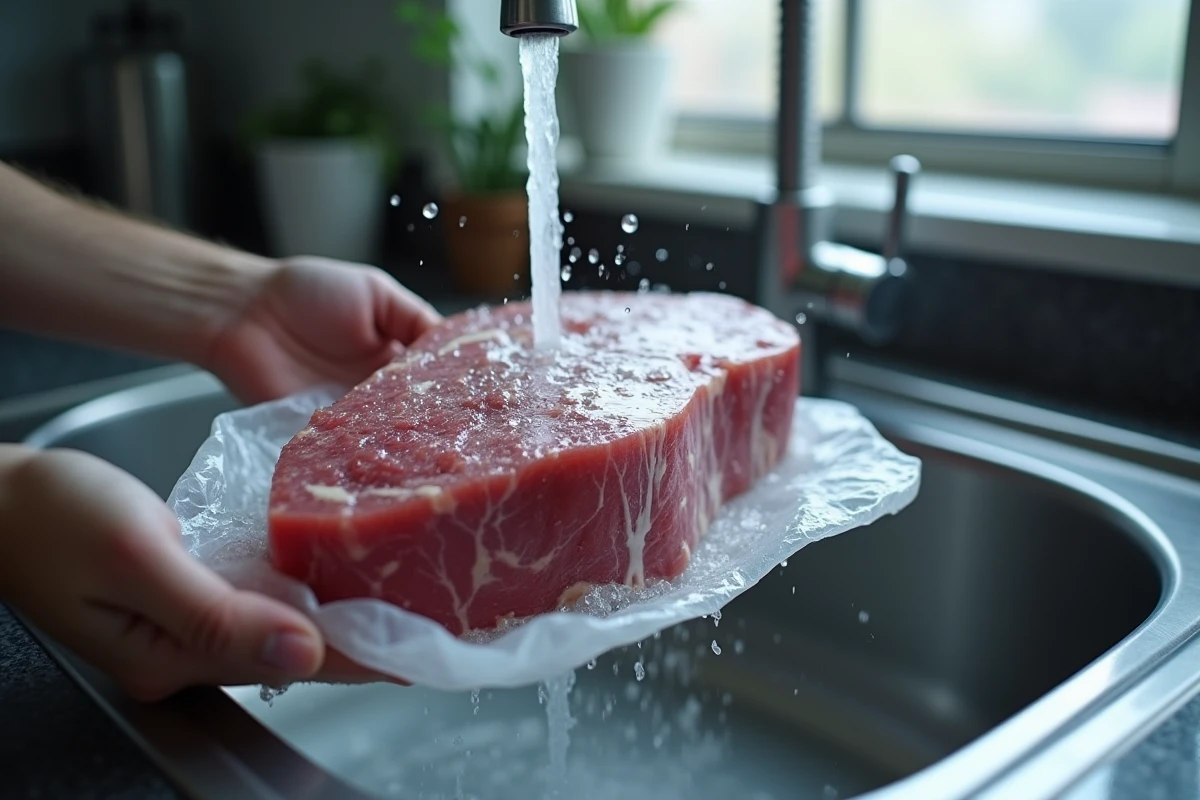
Running the block under a stream of cold running water for a few minutes softens the outer layer without compromising the frozen core. This trick then allows the blade of a rigid knife to slide between the stuck pieces (stacked steaks, agglomerated fillets).
ANSES validates this approach as long as the water remains cold. Warm or hot water causes thermal shock on the surface that accelerates bacterial multiplication even before the center begins to thaw. Keep the flow moderate and constant, avoiding prolonged immersion in stagnant water.
7. Long serrated bread knife
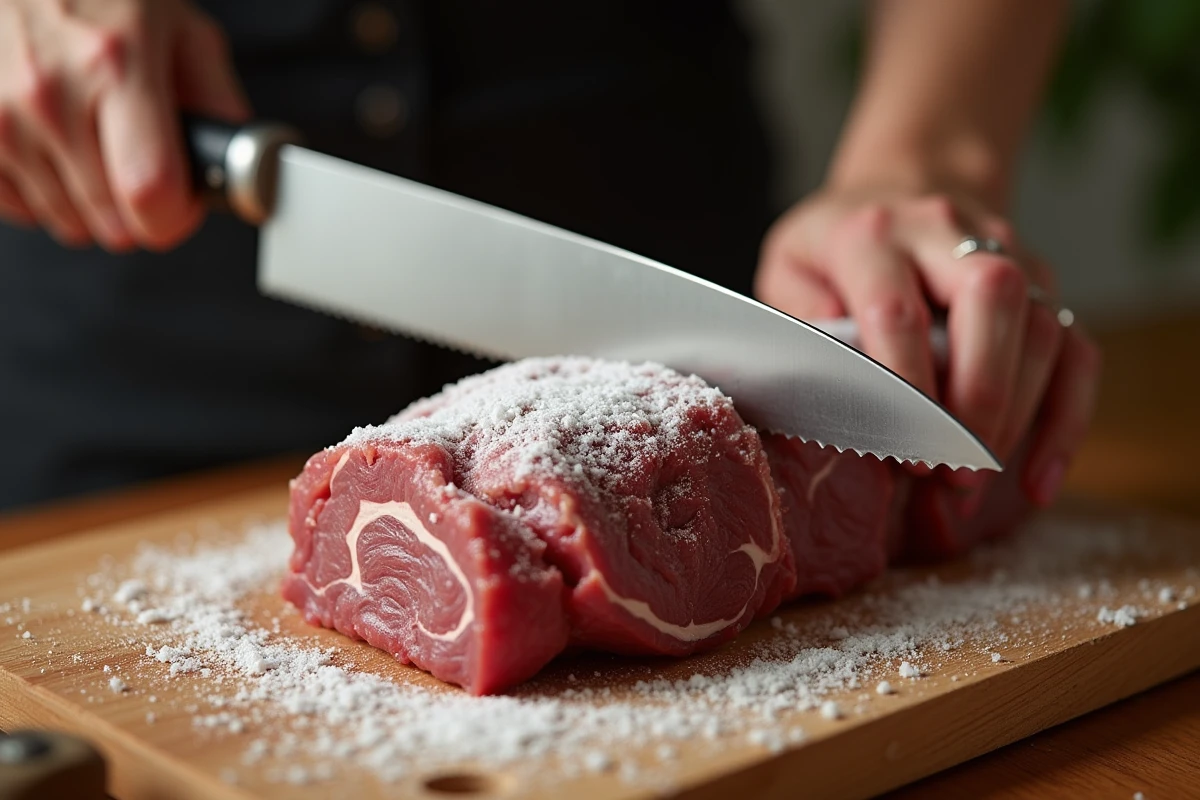
The bread knife is often the first reflex, and it works well on pieces of moderate thickness. Its long serrated blade grips the frozen surface where a smooth blade would slip. The back-and-forth motion, similar to slicing bread, creates a gradual groove without requiring excessive pressure.
Its main weakness: on a truly thick or very dense block (including bones), the blade lacks rigidity and may bend, resulting in uneven cuts. For fillets, slices of breast, or portions that are already relatively flat, it remains a perfectly acceptable backup tool that most kitchens already possess.
Regardless of the tool chosen, safety involves three reflexes: always secure the piece, cut by pushing the blade away from the body, and never use a dull knife on a hard product. A worn edge requires compensating with force, and it is precisely this poorly controlled force that causes the most frequent accidents in home kitchens.