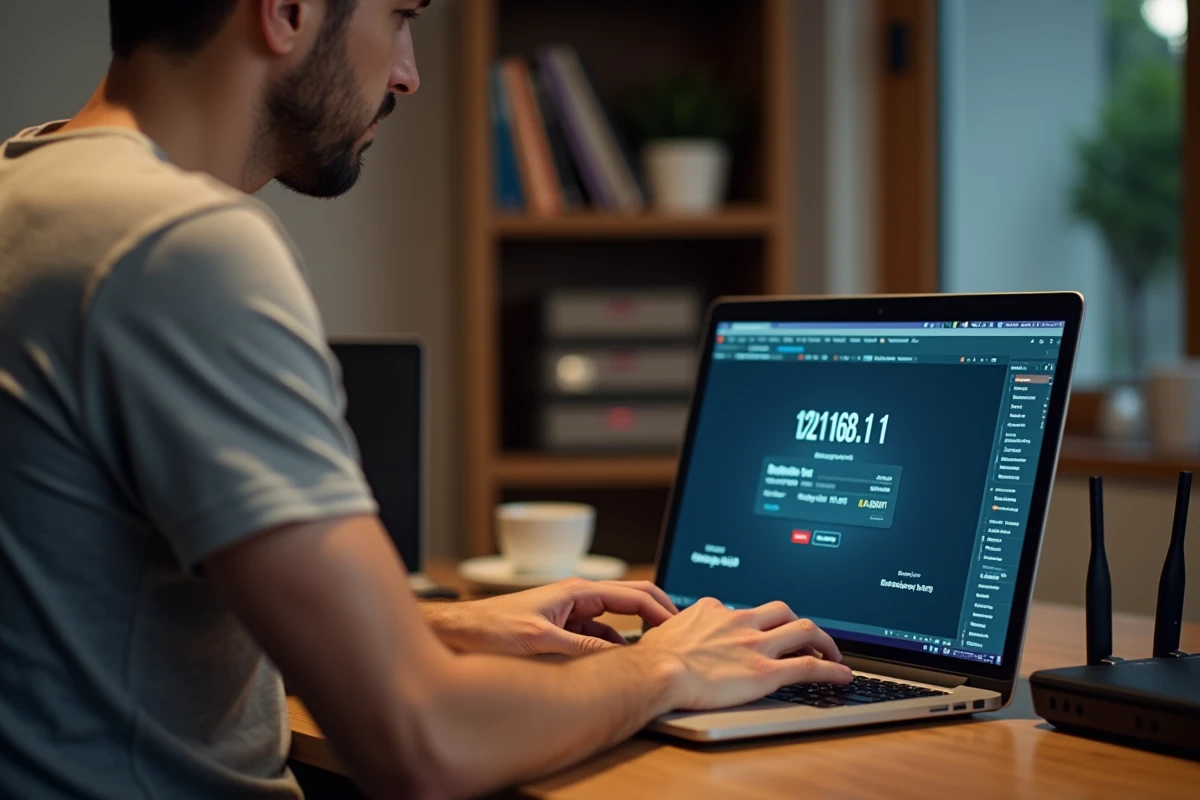
You type 192.168.l.l in your browser and nothing happens. The page remains blank or displays an error. The problem often arises from confusion between the lowercase letter “l” and the number “1”. The correct address to access your box or router’s interface is 192.168.1.1, with only numbers. This private IP address serves as a gateway to your local network settings.
Why 192.168.1.1 is no longer the only address for your box
For a long time, nearly all home boxes and routers used 192.168.1.1 as the default address. The situation has changed. Several router manufacturers, including mesh systems like TP-Link Deco, now use different addresses (192.168.68.1, for example) to avoid conflicts with other devices connected to the same network.
You may have also noticed that your provider offers you a hostname instead of an IP address. Orange uses “livebox/” in the address bar, Free offers “mafreebox.freebox.fr”, and Bouygues “mabbox.bytel.fr”. These names work even if the actual IP address of the box has been changed. It’s a more reliable shortcut than remembering a string of numbers.
When you seek to learn everything about the IP address 192.168.l.l, keep in mind that this address remains very common with Orange, SFR, and many third-party routers, but it is not universal.
Finding the correct IP address of your router or box
Before typing anything in your browser, check which address your equipment is actually using. The quickest method depends on your system.
On Windows with the ipconfig command
Open the command prompt (type “cmd” in the search bar). Enter ipconfig and press Enter. Look for the line “Default Gateway”: the number displayed is your router’s address. If you see 192.168.1.1, that’s the one. If you see 192.168.0.1 or something else, use that address.
On Mac or smartphone
On Mac, open System Preferences, then Network. Select your active connection (Wi-Fi or Ethernet) and click on Advanced, TCP/IP tab. The router’s address is clearly displayed.
On an Android or iOS smartphone, go to Wi-Fi settings, tap on the connected network. The gateway (or router) address appears in the connection details.
Accessing the administration interface with the correct credentials
Once the address is confirmed, open your browser and type it in the address bar, not in the search bar. Typing 192.168.1.1 into Google will not take you to your box. You need to enter the address directly, like a website URL.
A login page appears. It asks you for a username and password. This information varies depending on your provider:
- Livebox (Orange): the username is usually “admin” and the password corresponds to the first eight characters of the Wi-Fi security key written under the box.
- Freebox (Free): access is via mafreebox.freebox.fr, often without an initial username. A password is set during the first connection from the Freebox screen.
- Bbox (Bouygues Telecom): the default username and password are often “admin” and “admin”. The address may be 192.168.1.254.
- SFR Box: the default username is “admin” and the password is on the label stuck under the box.
Change the default admin password as soon as you log in for the first time. A generic password leaves your network open to anyone connected via Wi-Fi.
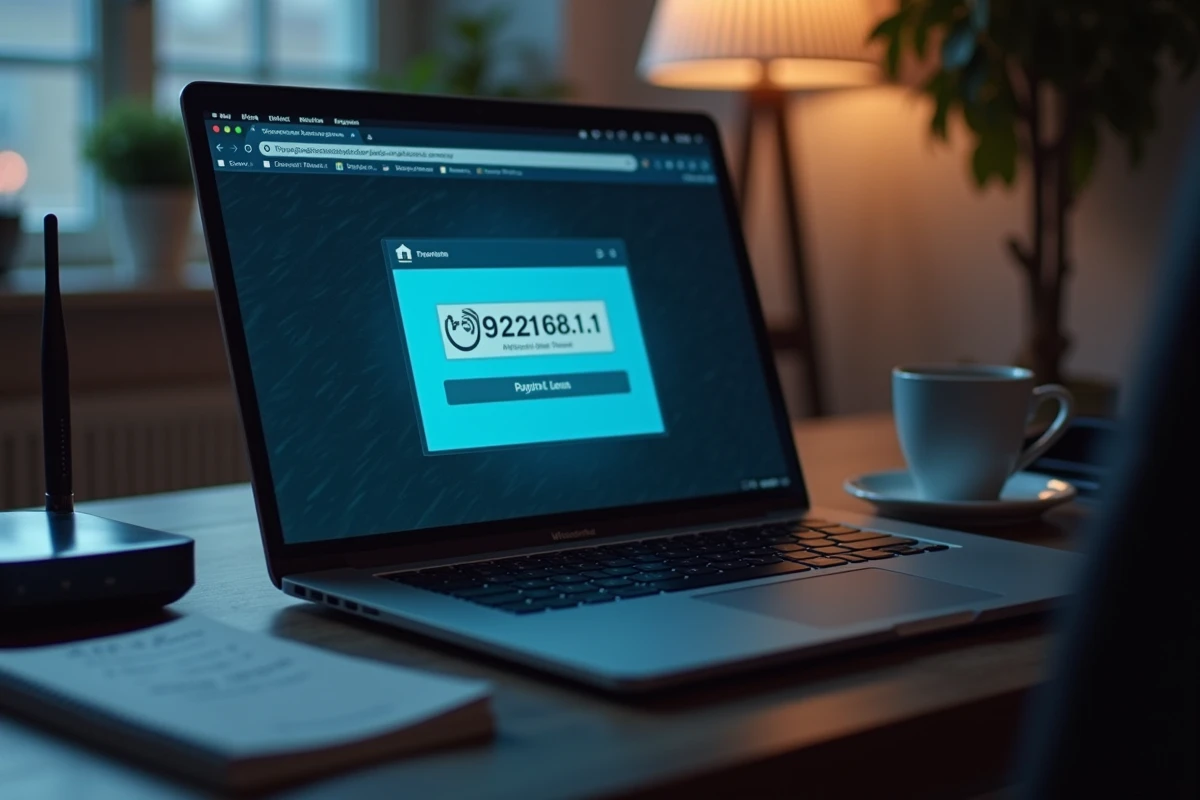
Wi-Fi settings and network security from the 192.168.1.1 interface
The administration interface provides access to several settings. Three of them deserve your attention first.
Wi-Fi network name and password
The SSID is the name that appears when you search for a Wi-Fi network on your phone. By default, it often contains the provider’s name and a series of characters. You can customize it to easily recognize it. Choose a long Wi-Fi password, with numbers and special characters.
Encryption protocol
In the wireless security settings, select WPA2 at a minimum. If your box offers it, WPA3 provides stronger encryption against interception attempts. Disable WPS (Wi-Fi Protected Setup), an old quick connection system that has known vulnerabilities.
Separation of Wi-Fi bands
Some recent boxes, like the Orange Livebox, allow you to separate the 2.4 GHz and 5 GHz bands. The 2.4 GHz band goes further but offers lower speeds. The 5 GHz band is faster but penetrates walls less effectively. Separating the two bands allows you to assign the right frequency to the right device.
What to do when the 192.168.1.1 page does not display
If your browser shows a connection error, several causes are possible:
- You typed the letter “l” instead of the number “1” in the address. Check each character.
- Your device is not connected to the local network (neither via Wi-Fi nor Ethernet cable). The administration interface is only accessible from the box’s network.
- An active VPN is redirecting your traffic to another network. Temporarily disable it.
- Your box’s address is not 192.168.1.1. Use the ipconfig command (Windows) or check in your device’s network settings.
If the problem persists after these checks, restart the box by unplugging it for about thirty seconds. A simple restart resolves most access blockages to the interface.
Network configuration via 192.168.1.1 remains accessible to everyone, even without technical skills. The starting point is to type the correct address with the right numbers, then secure access from the first connection.