Buying a pair of shoes online or on a secondary market carries a real risk: counterfeiting. Recent imitations reproduce logos, boxes, and even labels with a precision that traps experienced buyers. To recognize an authentic shoe, one must go beyond a mere glance and adopt concrete, verifiable reflexes with each purchase.
1. Feel the seams and glue at the sole-upper junction
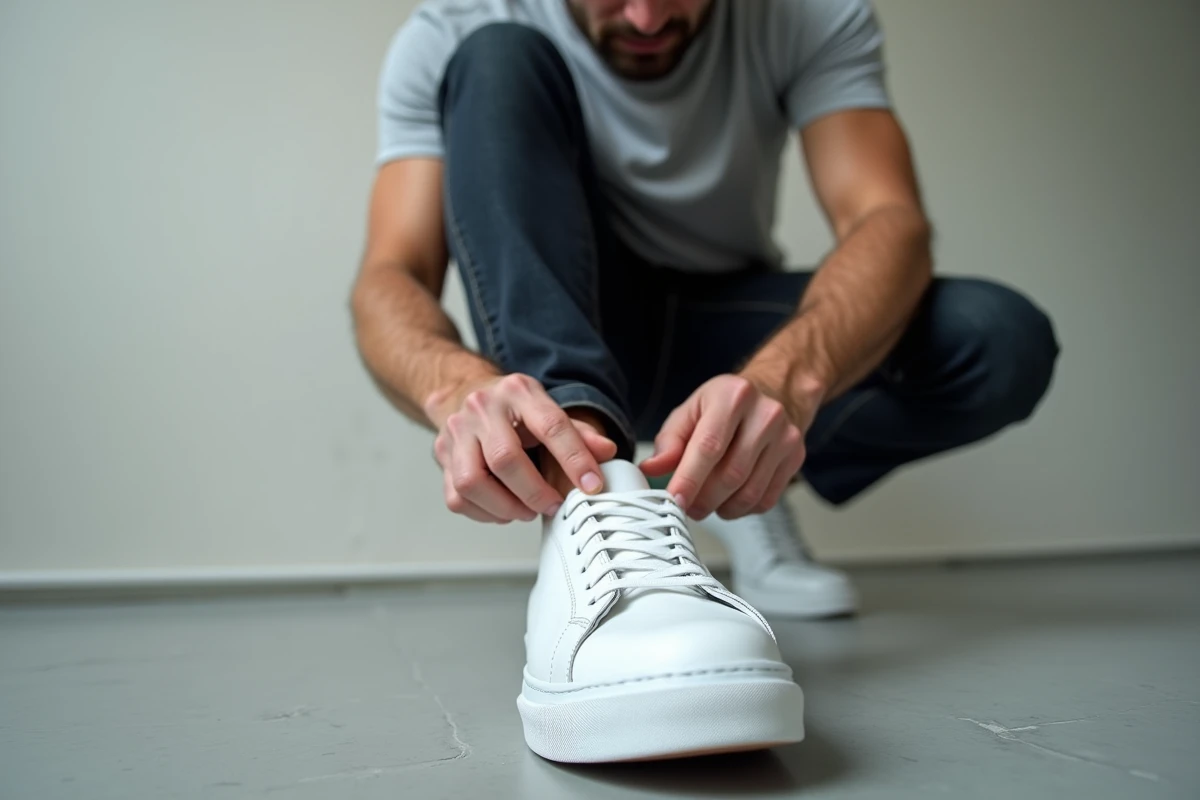
Before looking at the logo or the box, turn the shoe over. The junction between the upper (the top) and the sole concentrates most of the defects on a counterfeit. On an authentic model, the glueing is clean, with no visible overflow of glue to the naked eye.
The seams deserve the same attention. Regular and aligned stitches indicate controlled manufacturing. On an imitation, the threads sometimes change thickness along the line, or the stitches are spaced irregularly towards the heel, where quality control is less visible.
A detailed guide explains how to tell if a shoe is original on Oh my shoe by reviewing these manufacturing clues.
2. Compare the actual weight of the pair with the manufacturer’s specs
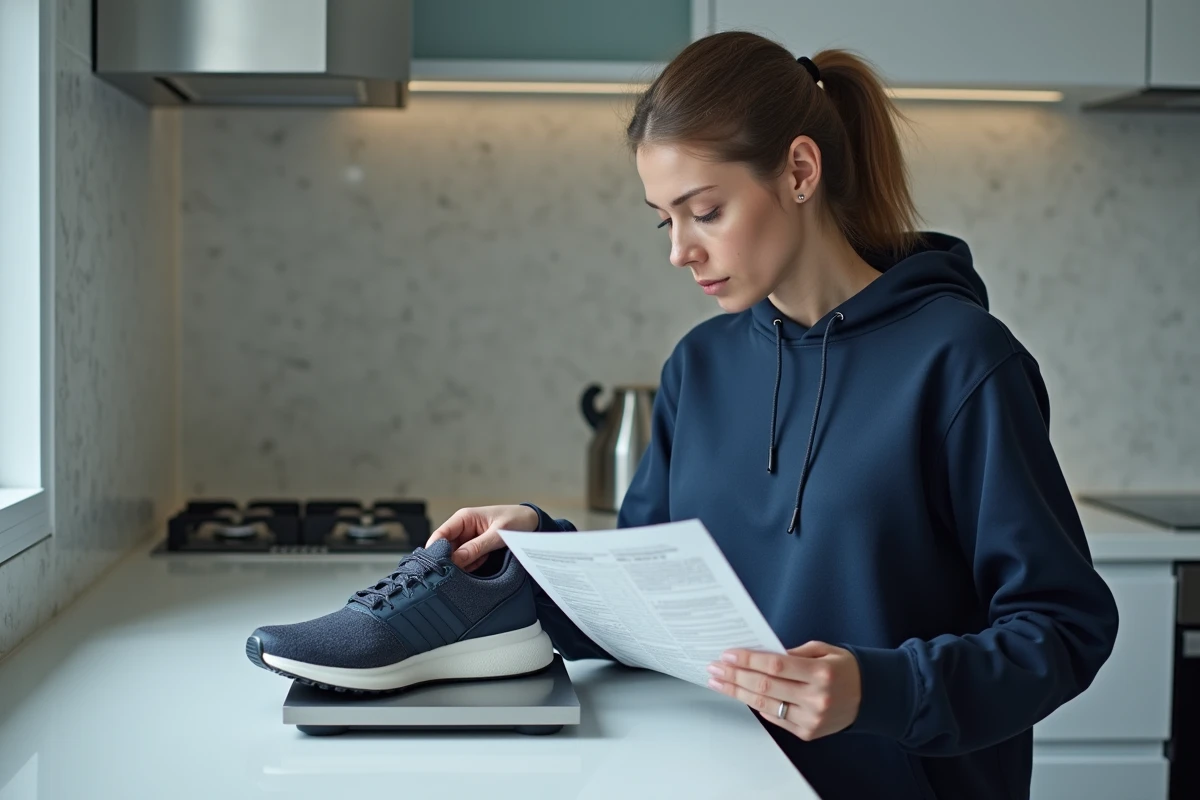
Have you ever noticed that a counterfeit shoe often seems lighter or heavier than expected? Brands publish the reference weight by size on their product sheets. A kitchen scale is enough to verify.
The discrepancy is explained by the materials: a proprietary foam midsole (like Boost or ZoomX) has a precise density. Counterfeiters use generic EVA, which can be denser or softer depending on the batch. A notable weight discrepancy reveals a substitute material.
This test requires no expertise. It works equally well on sports shoes and leather models, as long as you have the official weight as a reference.
3. Scan the barcode and QR code on the box
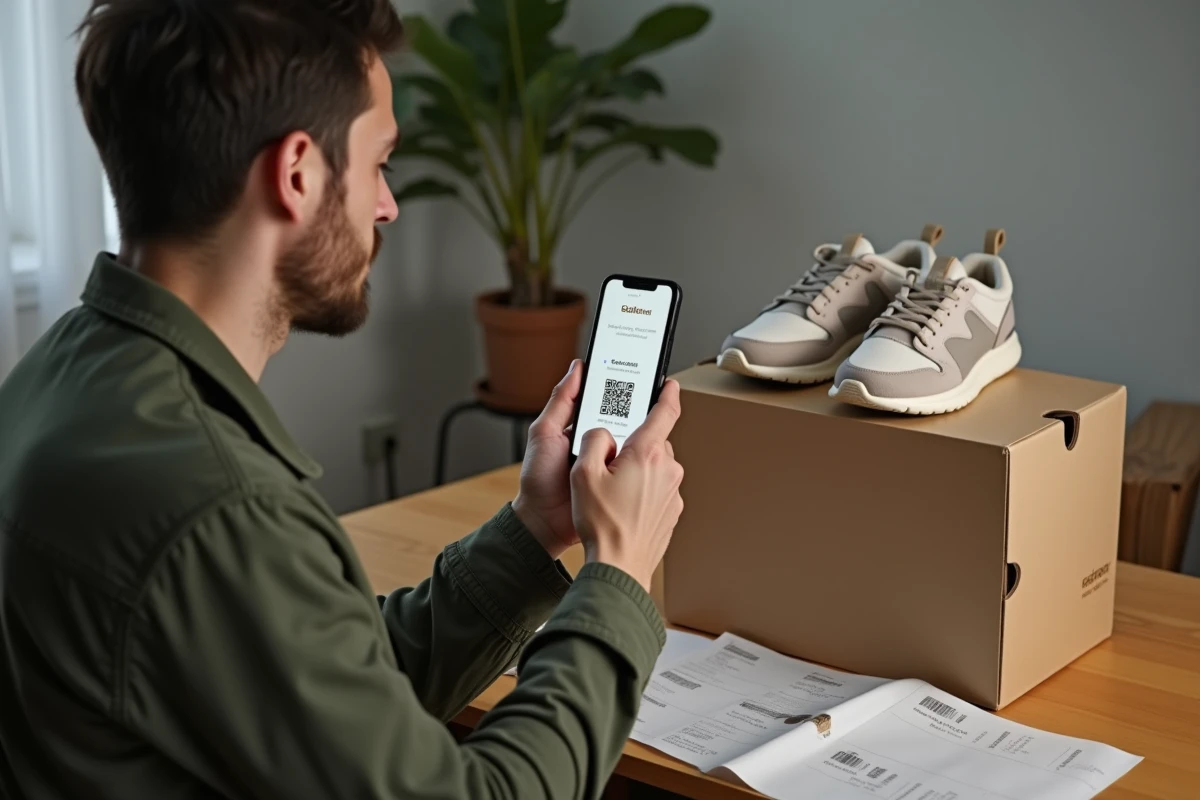
The box of an authentic shoe bears a barcode (EAN/UPC) and sometimes a QR code. Scan it with a free code reader app. The result should match the exact model, size, and colorway of the pair.
On a counterfeit, three scenarios arise: the code leads nowhere, it points to a different model, or the reference number on the inner label does not match that of the box. Any inconsistency between the box and the inner label is a red flag.
4. Inspect the typography of the inner label with a magnifying glass
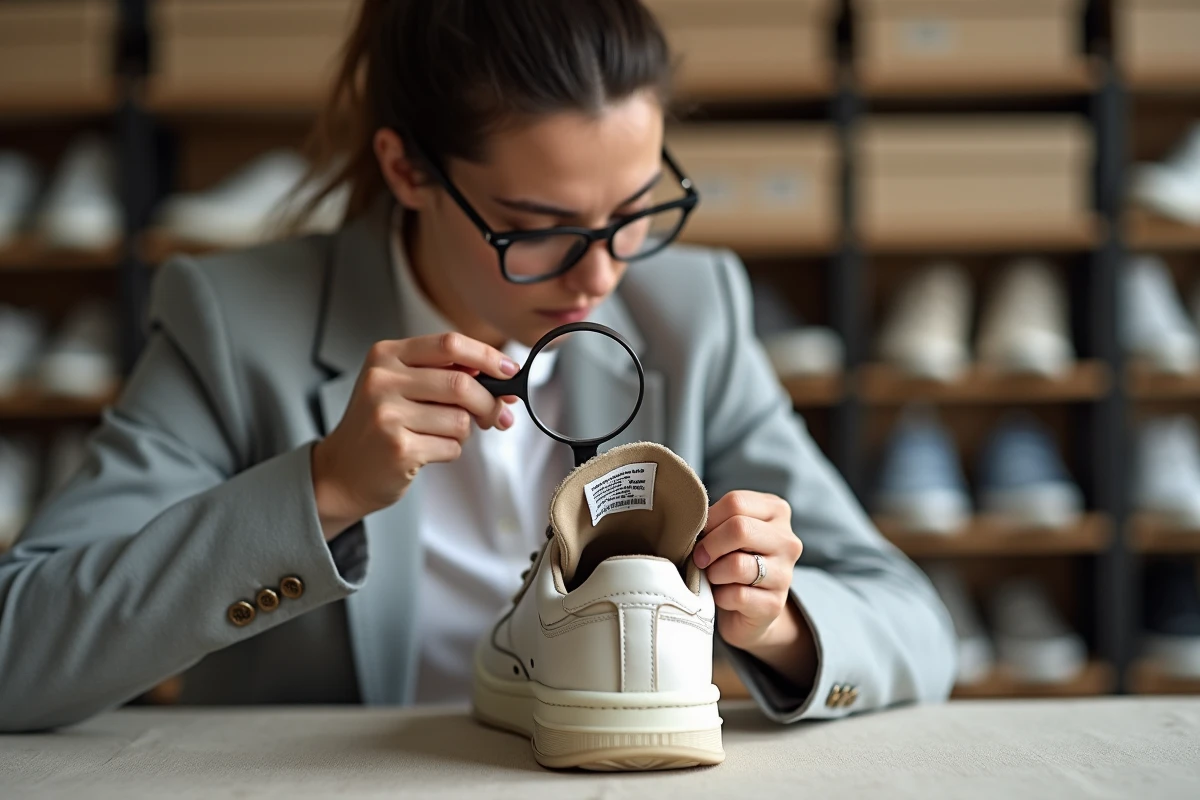
The label sewn inside the shoe (under the tongue or on the side) contains the size, country of manufacture, model number, and sometimes a lot code. On an authentic product, the font is consistent: same spacing, same weights, same alignments from one pair to another.
Counterfeiters reproduce the content of this label, but rarely its exact typography. You can compare with macro photos published on authentication forums or in databases of services like CheckCheck. A slightly wider “8”, a misaligned “©”: these micro-differences are reliable because counterfeiters frequently change printers.
5. Test the smell of the material upon opening the box
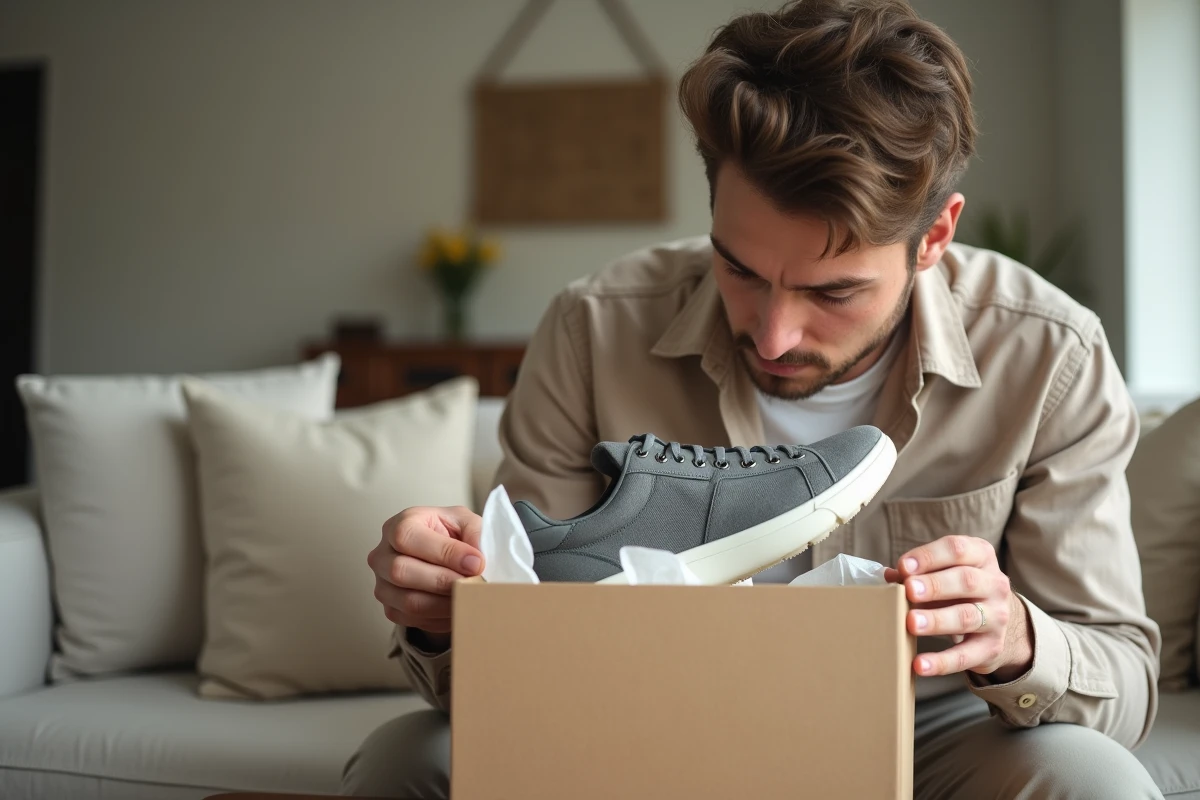
This test may seem artisanal, but it remains relevant. A strong and persistent chemical smell indicates inferior glues or materials. Genuine leather, suede, nubuck, and technical textiles have a neutral or slightly characteristic smell of the material.
Counterfeits often emit a mix of solvent and heated plastic smells, linked to low-quality industrial glues. This signal fades after a few days of airing, making it especially useful at the time of receipt.
6. Check the price against the official market and authorized resellers
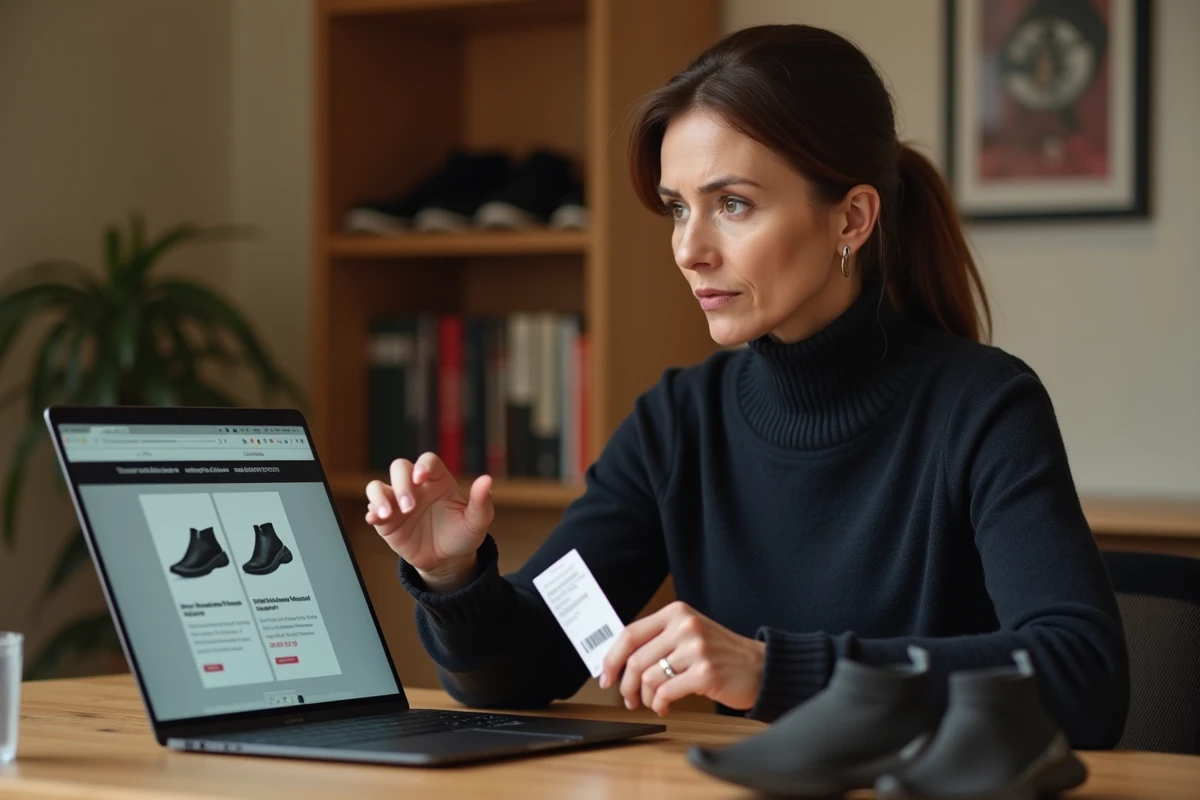
An abnormally low price remains the most reliable signal before purchase. Before ordering, check the reference price on the brand’s official website and with two or three authorized resellers. Here are the cases that should raise alarms:
- The price is more than a third lower than the lowest price observed at an authorized reseller, outside of official sale periods.
- The seller offers all sizes in stock for a limited edition model or one that has been sold out for several months.
- The sales site displays no legal notice, no physical address, and uses product photos copied from other platforms.
An excessively low price associated with a full stock of a rare model is almost always a counterfeit.
7. Use a third-party authentication service before paying
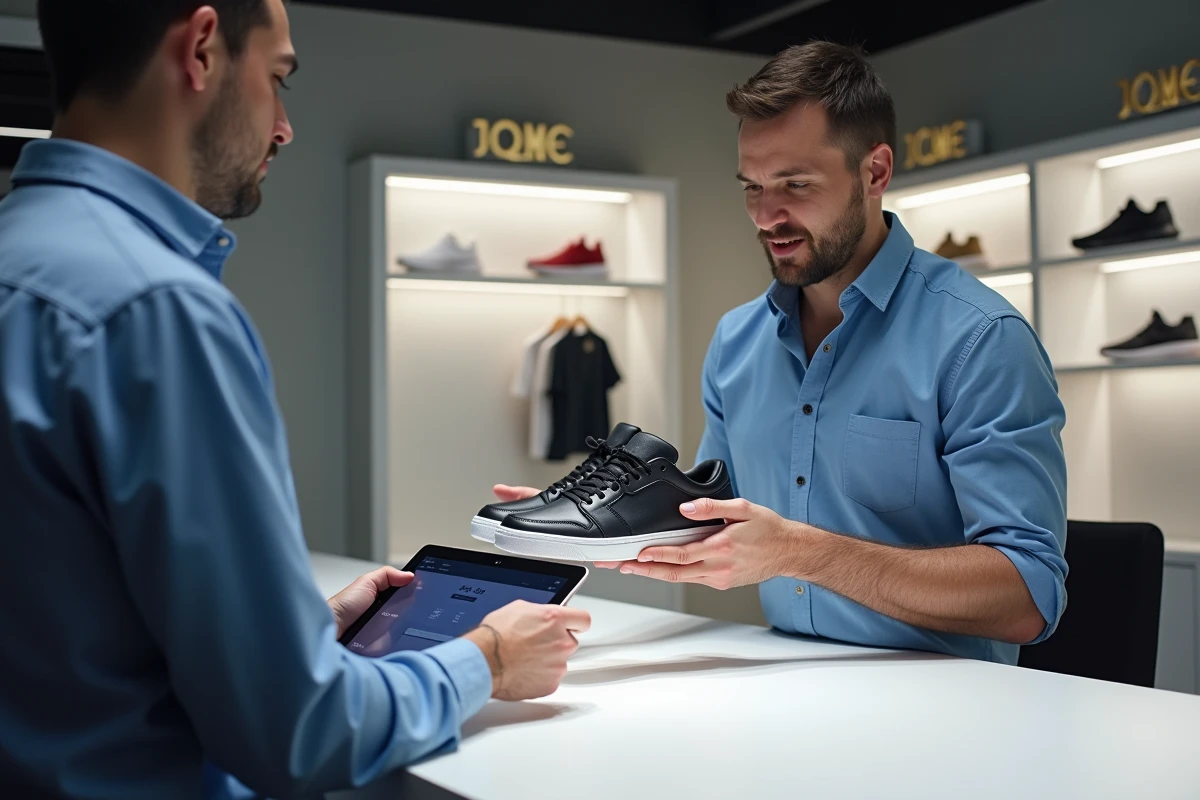
Platforms like StockX, GOAT, or eBay’s Authenticity Guarantee program include a physical authentication step: the pair goes through a verification center before being shipped to the buyer. Independent services like CheckCheck or Legit Check also offer remote authentication based on photos.
These services do not replace your own examination, but they add an extra layer of security. Since the implementation of the Digital Services Act in 2024, major European platforms must take proactive measures against counterfeit products, which has strengthened these systems.
- StockX and GOAT: systematic physical authentication before shipping.
- eBay Authenticity Guarantee: verification on sneakers above a certain price threshold.
- CheckCheck: photo authentication via mobile app, results in a few hours.
Shoe counterfeiting is evolving rapidly, especially with the emergence of so-called “superfake” copies produced from 3D scans. Cross-referencing several of these checks rather than relying on a single criterion remains the safest method to protect your purchase.