When you order a pair of jeans on Zalando, you receive the package three days later, and the button doesn’t close. The problem doesn’t come from the brand: it arises from the fact that sizes are not standardized from one manufacturer to another. A size 38 from a Scandinavian brand does not cover the same measurements as a size 38 from an Italian designer. On a platform that features hundreds of brands, this disparity quickly turns into repeated returns.
Take your measurements before consulting a Zalando size guide
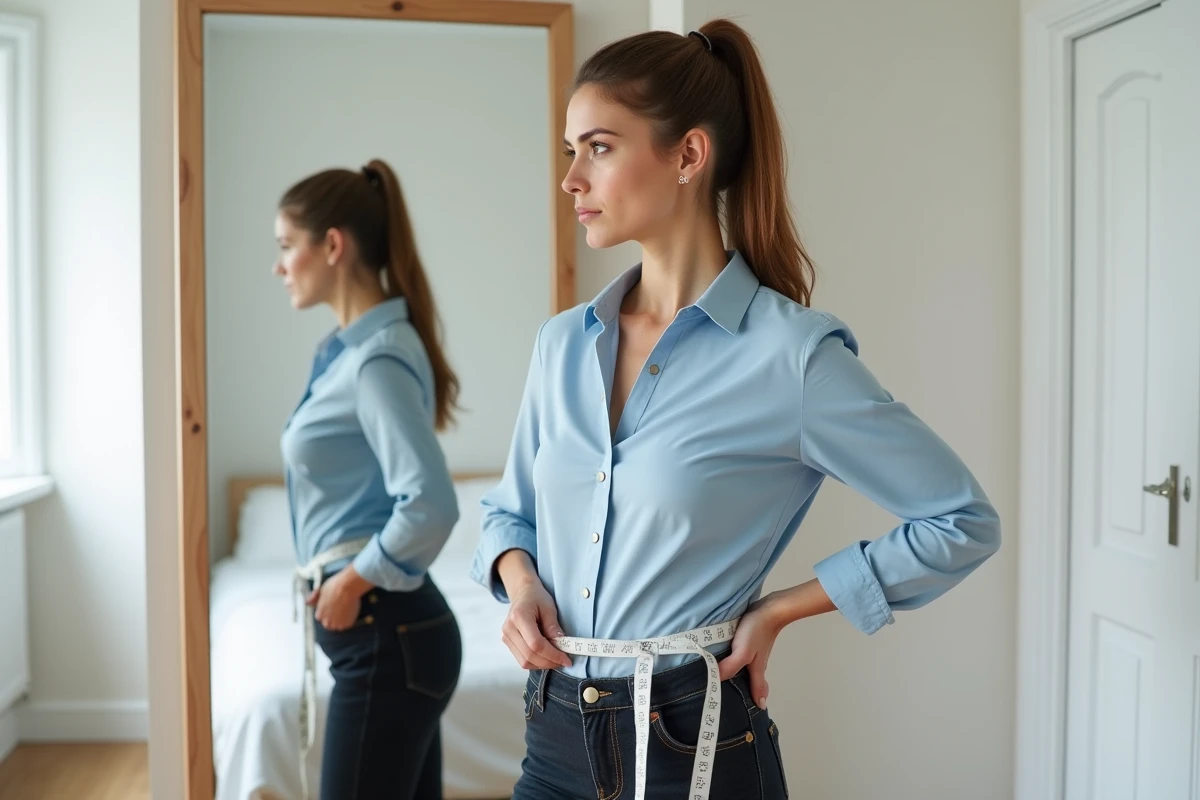
The first mistake is relying on the size you usually wear in-store. A size 40 from Zara does not necessarily correspond to a size 40 from a German or Danish brand sold on Zalando. To avoid this trap, start by taking three measurements with a flexible measuring tape, standing up, without tightening.
- The bust measurement, taken at the fullest part of the bust, with arms at your sides. This measurement determines the size of tops, jackets, and dresses.
- The waist measurement, taken at the narrowest part of the abdomen (usually above the navel). This is the direct reference for pants and skirts.
- The hip measurement, taken at the widest part of the hips. This is a crucial measurement for jeans and fitted dresses.
Once you have noted these three numbers, compare them to the size chart displayed on each product page. Zalando provides a specific guide for each item, not a generic guide: the differences between brands are already integrated. Before finalizing a cart, you can refer to a Zalando size guide to consult to cross-reference the information and limit unpleasant surprises.
Note your measurements once a season: the body changes, and a difference of one or two centimeters is enough to shift from one size to another on certain cuts.

Zalando’s AI size recommendation: what the tool really analyzes
When selecting an item, Zalando sometimes offers a recommendation like “We recommend size M.” This advice doesn’t come from nowhere. Since 2023, the platform relies on an artificial intelligence system that cross-references the provided measurements with the precise history of purchases and returns. If you returned a pair of jeans because they were too tight, the algorithm takes that into account for future suggestions.
In parallel, Zalando has integrated body scanning technology from photos, inherited from the acquisition of the start-up Fision in 2020. The idea is to generate a 3D avatar that simulates how the garment fits your body shape. The tool remains limited to certain product categories, and returns vary on this point depending on partner brands, but the 3D simulation significantly reduces the risk of error on fitted cuts.
When the recommendation is reliable, and when it is not
The algorithm works better when you have already placed several orders. With a history of three or four purchases in similar categories, the suggestion becomes more accurate. For a first purchase or with a brand never tested before, it is better to cross-reference the AI recommendation with the measurement chart on the product page.
Garments with very loose fits (oversized, loose fit) pose fewer sizing issues. It is on structured pieces (blazers, fitted shirts, slim jeans) that the AI tool provides the most value.
Read customer reviews to spot recurring size discrepancies
Reviews on Zalando contain information that neither the size guide nor the algorithm provides: the actual feel after trying on. When you see eight out of ten comments mentioning “size small, take a size up,” it is a more reliable signal than a conversion chart.
Focus on reviews that specify the buyer’s body type. A comment like “I am 1.72m tall and weigh 65kg, size M fits me perfectly” is usable. A simple “great product” is not.
Filter reviews by relevance
On some product pages, Zalando displays a synthetic indicator (“size large,” “true to size,” “size small”) based on aggregated customer feedback. This visual bar is located just below the size selector. If it leans significantly towards “size small,” moving up a size becomes a logical reflex.

Free returns on Zalando: a shopping strategy, not an admission of failure
Zalando offers a return period that allows you to order two sizes of the same item, try them on at home, and return the one that doesn’t fit. This practice, sometimes seen as wasteful, remains the safest method when discovering a brand for the first time.
The issue is not just the buyer’s comfort. Zalando has explicitly linked reducing size-related returns to its climate goals. Returns represent a significant portion of the platform’s logistical carbon footprint, and improvements to the sizing tool are correlated with emission reduction targets validated by the Science Based Targets initiative.
- Order two adjacent sizes for structured pieces (blazer, fitted dress, slim jeans) that you are testing for the first time.
- Keep the same size for basics from a brand already validated by a previous purchase.
- Return within the deadlines to maintain a clean size history, which improves future AI recommendations.
A well-documented return enriches your size profile and makes each subsequent order more accurate. Ordering two sizes is not a problem; it is the most effective way to calibrate your online wardrobe when you lack references for a brand.
Size on Zalando is not a mystery, but a combination of three reflexes: measure, compare with reviews, and utilize recommendation tools. As your order history grows, the suggestions refine. The first purchase requires a verification effort, while subsequent ones become easier.