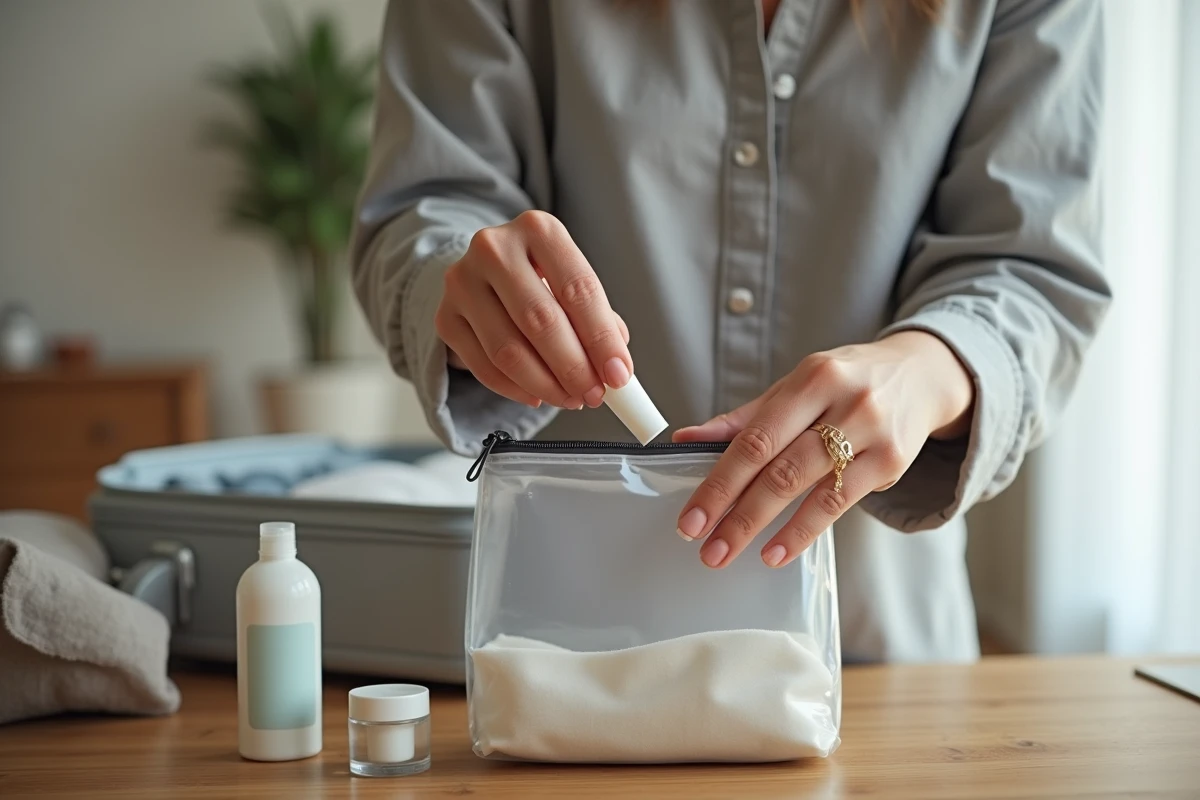
Toothpaste is classified as a semi-liquid product by aviation safety authorities. This classification subjects it to the same constraints as gels, creams, and liquids carried in the cabin. The standard toothpaste tube sold in supermarkets exceeds the authorized limit, which requires planning ahead before packing your toiletry bag.
3D Scanners in Airports: What Changes for Liquids in the Cabin
Several major European airports have deployed CT scanners (3D tomography) that modify the screening procedure. At London Heathrow, Amsterdam Schiphol, or Helsinki, passengers no longer need to remove their toiletry bags from their luggage or place them in a separate plastic bag.
The limit of 100 ml per container remains the official European standard. Equipped airports simply allow you to keep toothpaste in your luggage without additional handling at the security checkpoint. Some are even testing higher thresholds for liquids, but nothing is standardized.
The United Kingdom illustrates the current confusion well. After announcing the removal of the 100 ml rule in airports equipped with CT scanners, the Department for Transport asked several airports (Birmingham, Manchester, Leeds Bradford) to temporarily reinstate the strict rule. A transit passenger may therefore find themselves subject to different rules from one terminal to another.
The rule for toothpaste in cabin baggage with a maximum of 100 ml remains the most reliable reflex, regardless of the departure airport.
100 ml Rule for Toothpaste: Container or Content?
The most common confusion concerns what the 100 ml limit refers to. It is the capacity of the container that matters, not the amount remaining inside. A half-empty 150 ml tube will be refused at security screening because the container exceeds the limit.
Standard-sized toothpaste tubes generally hold 75 ml. They pass without issue. Family-sized tubes exceed the limit and must travel in checked baggage.
The Transparent Plastic Bag
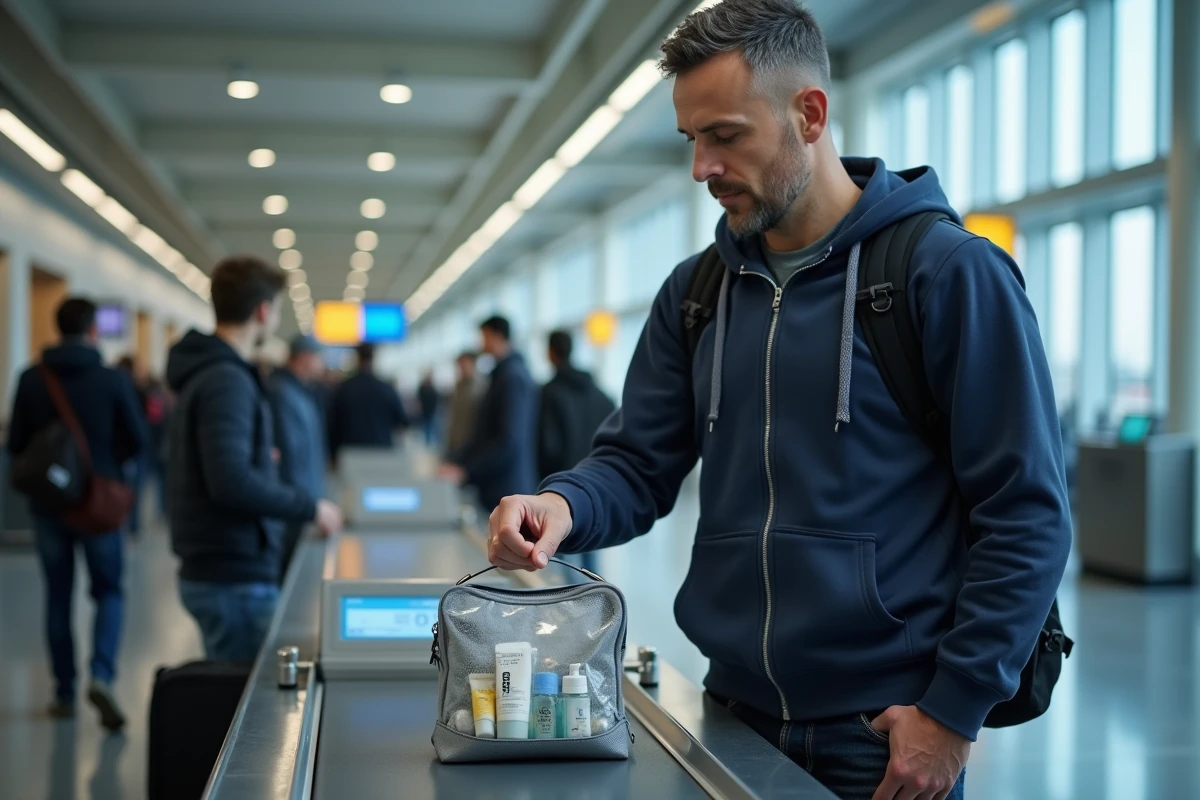
In the majority of European airports not equipped with 3D scanners, all containers of liquids, gels, and pastes must be gathered in a single resealable transparent plastic bag. This bag must not exceed a total capacity of one liter. Toothpaste finds its place alongside shower gel, deodorant, and any other semi-liquid products.
- Each container must not exceed 100 ml of nominal capacity (the amount indicated on the tube)
- All containers must fit into a single transparent bag with a maximum capacity of one liter per passenger
- The bag must be presented separately at the security checkpoint, taken out of the cabin baggage
Solid Toothpaste and Alternatives Without Volume Restrictions
Solid toothpastes (tablets, powders, sticks) are not subject to the liquid regulations. They are neither gels, nor pastes, nor liquids in terms of aviation safety classification. A solid toothpaste can travel in the cabin without quantity limits and without the need for a transparent bag.
Toothpaste tablets can be found at pharmacies or online. They are chewed and foam upon contact with saliva and a wet brush. Toothpaste powder works on the same principle.
For Which Travelers Do These Formats Offer a Real Advantage
On a long-haul flight with a layover, the one-liter bag fills up quickly with sunscreen, serum, and mist. Replacing the toothpaste tube with tablets frees up space for another product subject to the 100 ml rule. On a weekend with cabin baggage only, tablets eliminate the risk of a confiscated tube at security.
What Happens if the Toothpaste Tube is Confiscated at Security?
A security officer who detects a container exceeding 100 ml will remove it from the baggage. The product is discarded, not stored or returned after the flight. No exceptions are made for hygiene products, including liquid medications (the latter fall under a separate procedure with medical justification).
The confiscation does not result in any penalties or fines. The passenger keeps the rest of their baggage and continues boarding normally. It is still possible to buy toothpaste in the duty-free area after screening, but prices are significantly higher than in supermarkets.
Checked Baggage: The Rules are More Flexible
In checked baggage, containers of liquid products can reach 500 ml, with a limit of two liters per bag. A family-sized tube of toothpaste fits in without difficulty. For a long trip, slipping a large tube in checked baggage while keeping a travel-sized one in the cabin remains the most practical combination.
- Checked baggage: container up to 500 ml, total capped at two liters per bag
- Cabin: container up to 100 ml, total capped at one liter in a transparent bag
- Solid toothpaste (tablets, powder): no volume restrictions, either in cabin or checked baggage
The gap between airports equipped with 3D scanners and those still applying the classic procedure will continue to evolve in the coming years. Preparing a tube of a maximum of 100 ml and a transparent bag remains the only guaranteed method to pass security without unpleasant surprises, regardless of the airport.