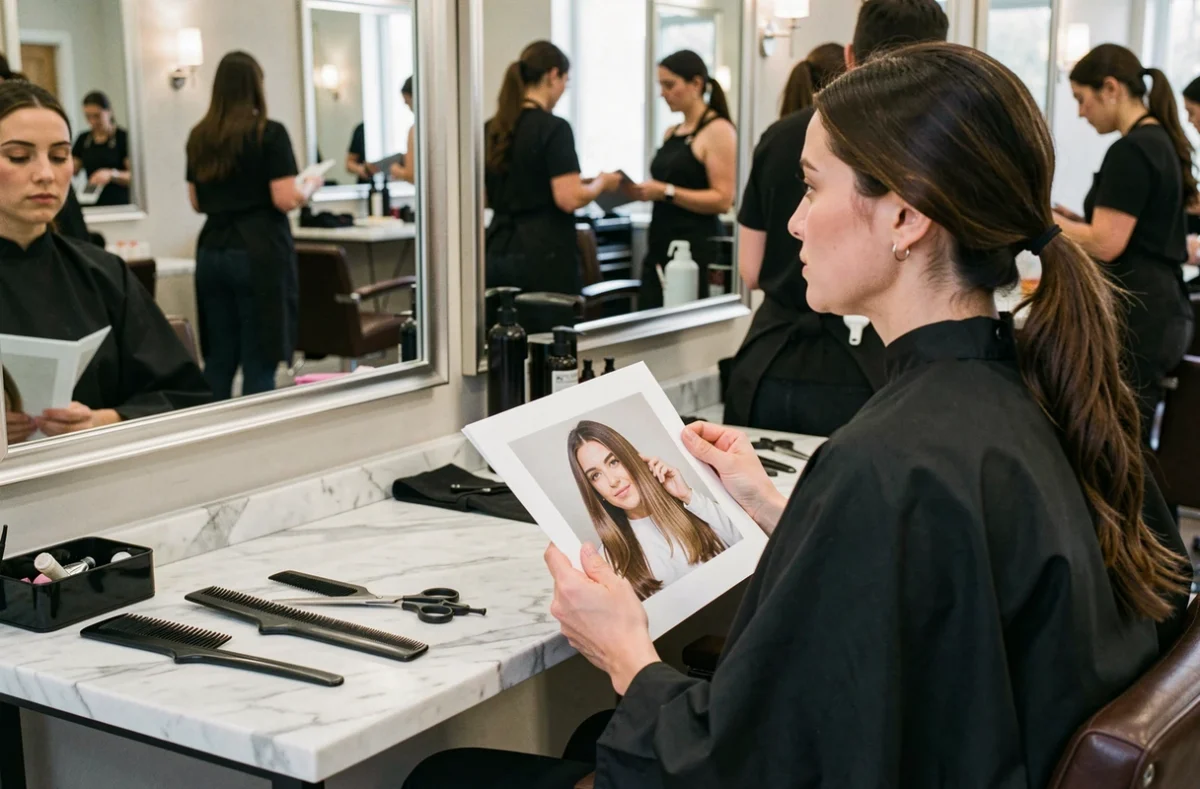
A haircut is chosen based on three measurable parameters: the shape of the face, the texture of the hair, and the maintenance time available each morning. Ignoring any of these factors creates a gap between the salon result and the everyday look. Understanding how these elements interact allows for a hair transformation that lasts, not just on the day of the photo.
Texture and volume: the factor that morphology alone does not resolve
Most haircut guides focus on the shape of the face. Morphology matters, but the texture of the hair determines the actual behavior of the cut once the blow-dry falls. A dramatic bob on smooth, thick hair will look flat on fine hair, and will create difficult-to-manage volume on very curly hair.
Three main textures dictate different constraints. Fine hair lacks hold: short layered cuts give it movement, while uniform lengths weigh it down. Thick or wavy hair better supports long cuts and bangs, but requires precise thinning to avoid a pyramid effect. Curly or frizzy hair often requires a significant length reduction once dry, making cutting wet hair risky without specific experience.
Before making any decision, touch your dry hair, without product. Assess their thickness, density, and how they fall naturally. This basic observation is worth more than any digital filter to anticipate the actual result after a few days of regrowth.
To deepen this personal analysis approach, beauty tips on Makeup Chic detail how to cross-reference morphology and texture for a coherent hair before/after.

Face shape and haircut: the combinations that work
The shape of the face is determined by measuring three areas: the width of the forehead, the width of the cheekbones, and the length from the chin to the hairline. The ratio of these measurements gives a category (oval, round, square, elongated, triangular) that guides the choice of cut.
- The oval face tolerates most cuts, from pixie cuts to shoulder-length styles. A straight fringe or a middle part suits it without disrupting proportions.
- The round face gains definition with cuts that visually elongate the features: a long layered cut, a side part, or volume concentrated on the top of the head rather than the sides.
- The square face, marked by an angular jaw, softens with wavy or slightly layered cuts at the jawline. Very geometric cuts (strict bob, thick straight fringe) accentuate angles instead of softening them.
- The elongated face benefits from cuts that create width: a fringe, lateral volume, or a length that stops between the chin and shoulders.
A hairstylist adjusts these principles considering the neck, head posture, and shoulder line. The shape of the face provides direction, not a fixed prescription.
AI haircut simulators: what they show and what they hide
AI hair simulation tools are multiplying. Their principle: upload a frontal photo, select a haircut, and visualize the result. In practice, these simulators accurately reproduce the silhouette and apparent length, but remain unreliable regarding actual volume and texture, especially for curly or frizzy hair.
An analysis published in September 2026 highlights that none of the studies reviewed systematically compare a simulation with the cut actually performed in the salon. The resulting recommendation is clear: use the generated image as a visual brief to show the hairstylist, not as a promise of result.
Optimizing the photo for a useful simulation
The quality of the photo strongly influences the relevance of the result. A frontal photo, with even lighting and hair pulled away from the face, yields usable results. A dark mirror selfie or one taken at an angle distorts the simulation and makes the discussion with the hairstylist less productive.
The simulator serves to open the dialogue, not to replace the expertise of the hairstylist. Showing two or three simulations during the consultation allows the professional to identify what attracts, recognize technical constraints, and propose a realistic adaptation.

Daily maintenance and haircut durability: anticipating the aftermath
A successful before/after is not judged on the day of the cut, but three weeks later. Recent trends favor sustainable transformations over spectacular changes that lose their shape in a few days.
Before choosing a cut, ask yourself a simple question: how many minutes do you spend on your hair each morning? Less than five minutes points towards cuts that work naturally, without blow-drying or styling tools. A textured short cut, a straight bob, or a light layer on medium-length hair fall into this category.
Choosing a cut compatible with your maintenance time avoids post-salon disappointment. A curtain fringe requires daily directed drying. An asymmetrical bob demands precise straightening or styling. It’s best to know this before committing.
Regrowth and frequency of visits
Very structured cuts (pixie, undercut, short fringe) lose their shape quickly and require a salon visit every four to six weeks. Longer and layered cuts tolerate more spaced intervals. Warm and natural tones, which dominate current trends, also reduce the visible contrast at regrowth compared to highly contrasting colorations.
The most successful style remains the one that requires the least correction between two appointments. Discussing the regrowth rhythm with the hairstylist during the initial consultation is part of preparing a before/after that remains credible over time.