
Before booking a plane ticket or contacting an organization, most responsible travelers spend hours searching for scattered information across multiple pages. Destinations, types of missions, conditions of stay, ethical commitments: everything is rarely gathered in one place. A sitemap for responsible travel solves this problem by providing a structured overview of all available resources, categorized by theme.
Three phases of responsible travel to identify in a sitemap
Recent recommendations, particularly those from the decalogue for responsible international volunteering shared by Xarxanet in 2026, emphasize a often overlooked point: a responsible trip is prepared in three distinct phases. Preparation before departure, the experience on-site, and the return form a complete cycle.
A well-designed sitemap reflects this logic. Look for sections that cover pre-trip training (ecological, intercultural dimensions), mission sheets by country or theme, and resources to enhance the experience upon return.
When you browse the Le Voyageur Solidaire sitemap, you quickly spot the pages dedicated to each phase. Instead of navigating randomly, you identify content that matches your level of preparation.
This approach avoids a common pitfall: focusing solely on the stay while forgetting that prior preparation conditions the quality of the immersion. A responsible tourism project that responds to a request made by a local organization requires solid documentation, not an impulsive booking.
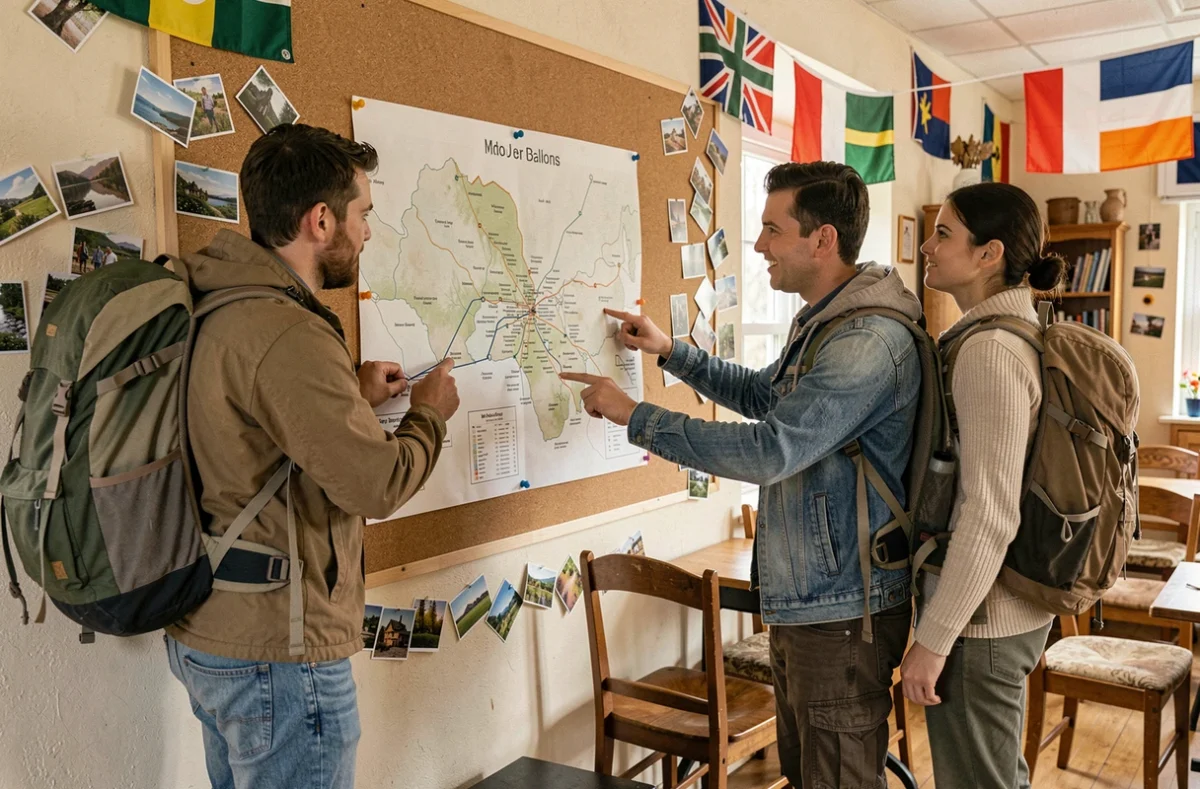
Responsible travel and voluntourism: what a sitemap reveals about an operator
Have you ever noticed that some responsible travel sites resemble classic holiday catalogs? Photos of sunsets, all-inclusive packages, but very few details about local partners or supported projects. That’s a warning sign.
The structure of a site says a lot about the operator’s philosophy. A sitemap that organizes its pages around missions co-constructed with local communities does not have the same architecture as a site focused on “traveler experience.”
Specialized organizations now clearly distinguish stays built with local partners from one-off experiences that prioritize the visitor’s experience. This sorting is possible as soon as you read the sitemap, by checking a few concrete elements:
- The presence of pages dedicated to local partners, with project descriptions rather than just names of villages or countries
- Sections on ethical commitments, the fair tourism charter, or the criteria for selecting missions
- Training or awareness content accessible before any booking, a sign that the operator considers preparation as an integral part of the stay
- The absence of formulations focused solely on the personal benefit of the traveler (“experience a unique adventure”) in favor of descriptions of the collective project
A serious operator structures their site around the local project, not around the tourist product. The sitemap makes this distinction clear in just a few minutes.
Filter destinations and missions by theme using the sitemap
A responsible trip to Tanzania in a fishing village is nothing like a family ecotourism stay immersed in an agroecological farm. The motivations, skills mobilized, and duration of commitment differ radically.
The sitemap allows for filtering without a search engine. Identify the categories: nature and biodiversity, education, health, local economic development. Each branch corresponds to a type of responsible project.
Tailor the search to your profile
Are you traveling alone, with family, or as part of an associative project? The answer changes the navigation. Family responsible stays often prioritize short immersion with shared activities, while individual commitments can extend over several weeks.
In a structured sitemap, these distinctions appear as sub-sections or tags. You save time by directly targeting the page that corresponds to your situation, instead of browsing through dozens of sheets.

Local volunteering or international departure: a choice that the sitemap can clarify
Local volunteering is gaining credibility as an alternative to international departure. Contributing to associative projects close to home helps avoid the environmental footprint of a long flight, while addressing concrete needs in your area.
A comprehensive sitemap also integrates local initiatives. Some responsible tourism operators offer missions in France or Europe, alongside projects in Senegal, Peru, or Tanzania. This geographical diversity, visible in the site’s structure, helps you compare options without bias.
Why does this choice matter so much? Because the solidarity dimension does not depend on the distance traveled. An ecotourism project in a French village can mobilize the same skills and produce an equivalent impact as a stay abroad, provided it meets an identified local demand.
Check the consistency between discourse and structure
A final useful reflex: compare what the homepage promises with what the sitemap actually contains. If an operator highlights fair tourism but their structure has no pages about their partners, selection criteria, or impact reports, the gap between the displayed discourse and the actual structure deserves your attention.
The sitemap is not a tool reserved for web specialists. It is a reading map that reveals the priorities of a responsible travel operator, the depth of their commitments, and the diversity of their projects. Take five minutes to browse it before committing: this simple habit changes the quality of your preparation.